When your outside isn’t matching your inside

Is it just me, or does it feel like the phrase “imposter syndrome” is getting confused and over-used? To clarify, I want to explore what it’s like to feel like you’re faking it. Maybe people assume you know what you’re doing, but you secretly fear that you don’t. 

First Things First: Being New is Normal

If you’re new at whatever you’re doing and feel like an imposter, then you’re probably an honest person on the right track. When we’re first learning anything, it’s all skills practice. We follow what we’ve been taught and practice the tools handed down by those more experienced than us. Over time, we integrate what we’ve learned into our own personality and style until it becomes our own. Everybody gets there by mucking it up along the way. 

Imposter Syndrome is for Everyone

Imposter syndrome doesn’t just affect newbies though. Everyone has days or weeks, even years, where they’re just off. Sometimes it may feel like we’re acting out an old version of ourselves; the autopilot works but doesn’t feel true. Certainly deeper inquiries deserve attention here, but growth isn’t only about change. Growth is also accepting the impostor feeling when it arises, without analysis. Winging it with whatever we’ve got, it’s possible to even enjoy wondering and wandering for a while.

Feedback Isn’t All It’s Cracked Up to Be

Sometimes we may feel like a fraud because of our collective infatuation with feedback. Likes, followers, comments, shares–maybe these forms of acknowledgment boost self-esteem for a moment when we get them, but they’re always fleeting. Does all this feedback (or obvious lack thereof) really help us? One might wonder if it actually keeps us more distracted by how we appear to others, rather than helping us cultivate and honor what’s true inside.

The “What Other People Think Of Me” Trap

Taking it a step further, whose opinion really matters so much anyway? Aren’t we all just people? We’re born innocent and fragile, and we die when our time comes. All the external standards of how a professional, parent, or person are supposed to be are culturally determined, a passing trend in a long history of changing expectations. What’s “best” is always evolving. When we open to healing around the ancestral and conditioned pressures to fit in, trying to measure up becomes less compelling.

The Five Stars We Really Need

It’s not about being a competent professional, a good mom, a successful entrepreneur, or a happy person anyway. It’s not about the roles we play or what we seem like to others at all. It’s about what we’re genuinely sharing. We can decide our current best is good enough–not because it’s the best ever, but because it’s ours. We need our own approval, a five star “I see what you’re doing and how you’re growing, and I think it’s awesome” rating. We won’t be everyone’s cup of tea. But that’s OK, there are plenty of other teas to drink.

The truth is you can only be an imposter if you’re trying to be something you’re not. Rather than trying to impersonate your best self, what if you had radical permission to exist and be? We’re all just learning and living here anyway, might as well go a little easy on ourselves and each other.

With love,

Julia Aziz

Sign up for my mailing list by clicking here!

PS–If you’re needing support to go deeper as you unwind patterns of feeling inauthentic and not enough, please do check out my individual counseling services and the women’s group program.
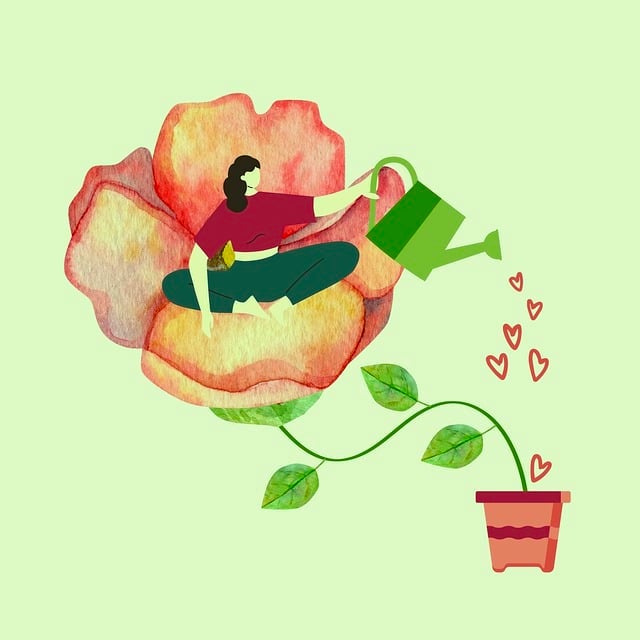
When you give your attention to everyone else first

Do you ever feel upset at people for asking too much, but you keep those feelings to yourself and do what they ask anyway?

Do you procrastinate what’s important to you while continuing to meet others’ expectations?

Do you sometimes feel unseen and taken for granted?

Maybe when you were young, you felt all the feelings in a room, and you took on the responsibility of making everyone else feel comfortable. Maybe you found security in caretaking those whose needs seemed to loom larger than your own. Now mind you, these aren’t bad tendencies; our society as a whole sure could use more sensitivity and caring about each others’ feelings! But when caring becomes people pleasing, it gets out of balance, becomes inauthentic, and can result in major burnout when one person is doing all the accommodating. So how do we unlearn the old patterns while holding onto our hearts?

In my experience, people who were conditioned to center their orbit around others often need more permission to value themselves. I’m actually not talking about putting on your own oxygen mask first or any other “me first”. “Me first” can get just as unbalanced as the “you first” culture of helpers and caregivers. You don’t have to stop caring for others; you can include yourself amongst the people you care for. If we become part of the “us,” it’s not about my needs vs. your needs. It’s about expanding the heart space for all. 

Like trees in the forest, we grow best as humans in community. Together, we re-discover our resilience and the healer within who knows just what to do.

Grateful to be in connection with you,

Julia Aziz

*The challenge of shifting from “you” to “us” is that past conditioning can have quite a stronghold, especially when old triggers persist and new patterns aren’t yet firmly rooted. That’s why making changes alongside other people is so effective. Just like you might go to a fitness class if you were trying to get in better shape physically, if you’re unlearning people pleasing, perfectionism, overdoing, and other accommodating patterns that lead to burnout, a group program like the Release & Empower Women’s Circle can support a real shift. More details on our next season can be found here.

Sign up for my mailing list if you’d like to explore similar topics together in the future.

Image by Rosy from Pixabay

When you don’t like to mess up or make mistakes

Do you worry about things you said or did and how other people may perceive you?

Do you battle niggling feelings of not being good enough? 

If you resonate with the term “perfectionist,” “people pleaser,” or “impostor syndrome,” you’re most likely a highly conscientious, caring individual with an acute sensitivity to nuance. You may also struggle with an inner tension that won’t let loose, a guard and self-critic whispering “sour nothings” that something is wrong with you. On the outside, all may look manicured and pretty. On the inside, trying to maintain control and tame creativity can be an exhausting drain of energy. 

One way to break out of the inner prison is the practice of making imperfect. You might say, who needs practice making mistakes; we do that all the time easily enough, right? But I’m talking about practicing welcoming those mistakes, embracing messiness, and loving fallibility. It goes against the grain for those who grew up finding their value in giving people what they wanted. We give lip service to fostering a “growth mindset,” but we’re not taught how to emotionally integrate failure and keep moving forward when everything goes sideways. That’s OK though; sometimes the best learning comes from stumbling through.

I’d like to share a prayer I worked with almost daily for a long time. It originated in something I read and eventually evolved into something more my own. I invite you to edit the words as needed to bring the most genuine relief and freedom to you too: 

You know who is not a perfectionist? Nature. It’s not our nature, nor is it in nature, to have everything line up just so, for all eternity. Find the most beautiful symmetrical flower you can, and there will likely be just one little tear. Some tiny “flaw” that makes it slightly different from its neighbors. Yet wow, isn’t nature filled with such fantastically intricate patterns? Take a closer look at that flower, and you’ll see the awesome beauty of her just being herself.

May you be imperfectly, beautifully whole, and gloriously you,

Julia Aziz

🌝🌜🌚🌛🌝


Sidebar on the word “prayer”

If you’re not used to praying, or if the word “prayer” brings up religious trauma or resistance, know that it doesn’t matter if you are praying 
to something or not. I think of the phrase Baruch Hashem from my own tradition, meaning “Blessed is the Name.” I like it because it captures the non-nameable aspect of divinity–I translate Baruch Hashem as “What an amazing wonder this all is, whatever you want to call whatever it is you’re calling.” How could our limited language capture the essence of interconnection and everything we can’t perceive/don’t understand as a tiny person in a vast universe? So it’s OK, we don’t need intellectual understanding of what we’re doing here. What matters is we keep expressing from the heart. We keep opening to ourselves, to each other, and to all of life as is.


Sign up for my newsletter to stay connected.

When you’re over-giving and doing too much

I’ve never liked the saying, “if you need something done, give it to a busy person.” To me, it sounds like, “pass the work to the person already overloaded with responsibility, and let everyone else chill.” The intention may be to get something done, but the effect is to ask more of someone who may have trouble saying no. Of course, it’s up to each one of us to maintain healthy boundaries and turn down requests we don’t have the bandwidth for. The problem is, busyness is like a force of nature–once you’re rolling fast, it’s easier to keep rolling than to slow down

If you’ve ever had a pattern of over-fuctioning, you know what I’m talking about. You can put your head down and push through busy times, but you can also end up exhausted and depleted from the effort. When there’s finally time to rest, rather than celebrate a job well done, you may just need to recover. It’s not sustainable or even efficient to be on “give” mode all the time. 

What if there were another way though?

What if when you took on more responsibility, you also received more of what replenishes you?

Here’s the new deal: the more we take on, the more we need to take in. That means rather than overdoing it, we “over-give” to ourselves so we can continue to give to others. What does this look like?

  • Blocking out self-care and renewal time during prolonged periods of high stress. Doing this on purpose, even though at first it may seem inconvenient and impossible. This means you actually schedule in time where no one is asking anything of you, including yourself! 
  • Treating yourself to more support than you’ve ever had before, in new and different ways that refresh your spirit and bring vital energy and inspiration into your life.
  • Releasing the idea that there’s not enough time or resources, and opening to the possibility of doing things differently, making room for your capacity to expand. Changing old patterns may be scary, but it’s a worthy risk if it means you can enjoy giving again.

Does this sound good? Impossible? It is certainly a lot harder to make these changes within the same cultural context that tells us we are only worthy if we are doing something productive, income-producing, and/or for someone else. Balance would be easier in a community that supports slowing down, respecting cycles, and stopping when there’s enough. Rather than repeating the unhealthy patterns of what Mark Silver aptly terms “late stage capitalism,” why not be part of a cultural shift? If you tend towards having a lot on your plate, and you’d like some support changing the way you hold all of it, check out the Release & Empower Women’s Circle. It’s women who give a lot to others empowering themselves to set boundaries, receive more, and prioritize their well-being. It’s time to balance these cycles of giving and receiving and co-create the world we want to live in. It’s time to keep commitments to ourselves the way we keep them to our loved ones. We heal these patterns together.

Sending love,

Julia Aziz

Sign up for my mailing list to receive these reflections in your inbox, as well as a free gift of some easy tools for self-love.

Beautiful Mistakes & Life U-Turns

The other day, my 10-year-old asked if she could teach me how to paint wildflowers. While I am a person who delights in all forms of creativity, art has always been the most challenging for me. I can throw some colors on a piece of paper, but ask me to visually represent a specific object, and you’ll receive something that looks like a young child made it. My daughter, however, has taken many hours to master the art of small flower watercolor painting. As she demonstrated her techniques, I followed along but couldn’t quite get my messy blob petals to match her delicately formed ones. “Beautiful mistakes,” we decided to call my stray colors. “Because when you make a mistake, you can keep going and make something new and beautiful out of it.”

I try to be mindful of my language around this topic, as even the word “mistake” implies there is one right way you can get wrong. Some of us learned early: good girls follow directions. If you do what you’re told, you won’t stand out or get into trouble. We can hide behind this facade of who we think we’re supposed to be for decades. What starts as protection from criticism can easily become a cage with no room for individuality or creativity. Keeping up appearances by trying to stay inside the lines can drain our essential life force to near empty.

The old way, the way of perfectionism says:

Get it right the first time. Don’t make a mess. Don’t be a bother.

Really though, haven’t we had enough of this already? Life is messy! It just is. The artistry of my life–my decisions, the ways I fail, the ways I grow–doesn’t match the artistry of yours, and thank goodness! Our messes make us unique. I think of a flower with a torn petal. Shall we toss it to the wind for being imperfectly symmetrical, or will we cherish its fragile beauty? 

If you’re someone who finds her/his/their self caught in this perfectionist prison, what would happen if you fell out of character once in a while? It can be scary to forgo the filter and start responding authentically. Being raw and real, even with self-consciousness, is a service though: we help other humans feel better about making mistakes and being seen too. When we forgive ourselves for not always getting it right, we don’t become more self-absorbed and narcissistic. We become more available. There is more of us to give to others when we’re not busy fighting ourselves. 

Old patterns get entrenched and so often release slowly, with intentional practice. My personal practice lately has been about embracing with compassion, curiosity, and humor what I’ve been calling “life U-turns”. A life U-turn is when we get invested in a new idea for change and go full throttle towards it, only to say “never mind” some steps in. When we do a U-turn, we head back to where we came from with a different point of view. Was it a personal flaw that caused us to move toward that new direction in the first place? Was precious time wasted doing the wrong thing? Or is it possible the “mistake” re-affirmed some essential value we still hold, allowing what was too familiar to be discovered anew. 

Mistakes clarify direction; coloring over the lines helps us think outside the box. I say “Hallelujah!” to this trial and error path forward. As we return to public life, what used to be commonplace feels novel and pretty bumpy. I hope to appreciate even the awkward moments, navigating new boundaries and getting used to each other again. Shall we give it a try, even with our differences? Slowly, let’s stumble forward and rediscover each other’s wholeness again.

Wishing you ever deepening breaths and the gift of seeing beauty in unexpected places,

Julia Aziz

Sign up here to receive these monthly musings in your inbox.


PRACTICE UPDATES

If you’ve been curious about working together in 1-1 sessions, listening to the first 10-15 minutes of this recent podcast interview will give you a better idea of what my practice is like. If you listen further, you’ll also hear stories about how I became a therapist and what working as an interfaith hospice chaplain taught me. While the title of the interview is Grief and Loss, and we do talk quite a bit about death and dying, it’s also about embracing the inherent discomfort of change. Give a listen if you like!

The next season of the Release & Empower Women’s Circle is open for registration, so check it out!

When you’re giving out more than is coming in

Have you ever heard a fox cry? A week or so ago, I was in the hill country and heard what sounded like a child screaming, “Help!” in the night. It was a little disconcerting until we realized it was a fox. My friend and I responded by sounding out a similar cry. The more we called back, the closer the fox seemed to approach us. She came near but never all the way to where we stood. We continued to stay in conversation for a while though, until she moved on.

If this fox actually was crying for help, the help she needed was not for someone to go and rescue her. She seemed to find her own way eventually. Maybe she just needed to be heard, to know someone else was out there crying too. I feel a similar dynamic evolving in this next phase of the pandemic together. In the old paradigm, there were damsels in distress and rescuers. There were people in need and people who helped. This dichotomy was always false though. We carry both of these archetypes within us; we are each vulnerable and strong. Pretending there are some who have it all together and others who only fall apart has led to situations like the mental health crisis for therapists and real burnout for healthcare professionals in general. 

These are intense times, so if you’re not always doing so well, that seems about right to me. We’re not meant to feel always cozy and well in a sick and troubled society. We are meant to be uncomfortable as much as we are meant to be brave. Who says we have to be stoic about any of it? One of my favorite memories of last year was when I stepped outside one morning in Colorado and heard my dear friend and neighbor screaming at the top of her lungs on her front porch. I immediately responded with a loud roar of my own. We laughed about it when we saw each other later, but in the moment it just felt good to be in our own messiness and know we were not alone.

Being heard feels risky, I know. As a therapist, I’ve been well-trained to not show too much of myself, good or bad. Helping professionals are taught to be clear mirrors for others. We’re not supposed to fog up those mirrors with our own personhood. We hold space for other people, not take up space ourselves. I don’t buy it as a way to live a whole life though. I can express what’s within me in contexts I feel safe in, and also show up with presence, compassion, and my full attention for someone else. We all have gifts, and we all have burdens. There is room in this world for the humanity in us all. I’d like to shed all pretenses of “helpers” and “helped” and instead sing out loud with you the music that arises from our dashed dreams, our triumphs, our sorrows, and most of all, our love.  

When we cry out like the fox and hear another’s cry too, it’s not just about venting. It’s about remembering: this life on earth didn’t come with a promise of feeling happy most of the time or everything working out a certain way. You’re not failing at that game. This life is an adventure of growth and change, an opportunity to feel and experience everything. Our stories are heroic tales of resilience. You’re here, and you’re doing it. We all are! 

Please share your voice, and know I am rooting for you. 

With love,

Julia Aziz

PS: If you are helping or caregiving other beings, and you feel like more is going out than coming in for you, please check out the women’s Release & Empower Group. As one recent participant said,

“I feel so much permission to just be however I am in this group. The journaling, the movement, the breathing, the sharing–it’s all what I’ve been needing to do more of for myself and now I feel like I’m making room for it again. I feel so thankful for the women here, and know that as I am going through some changes in my life, this is just where I need to be.”

Taking the Blame vs Taking Responsibility

Are you pretty hard on yourself? In my experience, when something goes awry, some tend towards blaming external circumstances and other people, while others almost always point the finger inwards. If you are one of the latter, you may have been taking the blame for long enough, and perhaps it’s time to take responsibility instead.

Here’s the difference, as I see it:

Let’s suppose there is a conflict, a misunderstanding, or some kind of big interpersonal mess. When we take the blame, we are saying, “Oh no, I’ve done something wrong. It’s all my fault. I messed up, of course I did.” That litany can go on and on, all with the purpose of self-flagellation. The result? Feeling crappy about yourself and stockpiling reasons why you’re not a good person. 

Now take this same conflict, and instead of taking the blame, take responsibility for your part (and your part only). This looks more like, “Oh wow. I missed the mark there, and I am going to look at this further so I can make amends, starting from where we are now.” When you take responsibility, you acknowledge where you made a mistake, and you don’t beat yourself up because you know you are human, we all make mistakes, and you want to do better next time. It’s the difference between using what happens in life to prove you’re unworthy and using what happens in life to learn and move forward. The only way to make that shift, in my experience, is to develop a true friendship with yourself. One where you look in the mirror and say, “Hey, I really like hanging out with you all the time. You understand me even when no one else does.” 

That’s also part of the difference between taking the blame and taking responsibility. It is very possible that you did something that hurt someone else, and you didn’t mean to hurt anyone at all. Both can be true—someone else is hurt AND your heart was in the right place. With clear communication and a wider perspective, we can see where we went off course and take correction for next time. We can ask forgiveness and know we are worthy of it, even if we don’t receive it from anyone but ourselves. And if someone is angry at you for more than what you actually did, maybe you don’t have to take the blame, and you can still have compassion for what they’ve been through. 

As I’m getting to know the amazing women in the release and empower groups, the question on my heart is “What happens when nice girls find their strength?” I’m not at all an advocate of becoming cold or uncaring. Considering other people’s feelings is essential to the entire world’s well-being. But many of us will break out of our shells and have SO much more to offer when we care a little less about what other people think. When you love yourself, you can clean up the messes you make instead of collapsing in them. You can hold others accountable for their parts without blaming either one of you. You can be a true friend to yourself no matter what happens next.

I hope this message speaks to you in some way that is helpful. If it doesn’t, I hope you send it straight to the trash without a second glance. Maybe this message wasn’t meant for you; maybe someone else needed to hear it instead. You get to decide what you allow in. I honor your truth, and I sincerely thank you for honoring mine.

May your heart overflow with compassion for yourself, and for everyone else in this crazy human existence,

Julia Aziz

Receive reflections like this in your inbox now and then, along with a free gift of a few simple practices to help you through your days.