Beautiful Mistakes & Life U-Turns

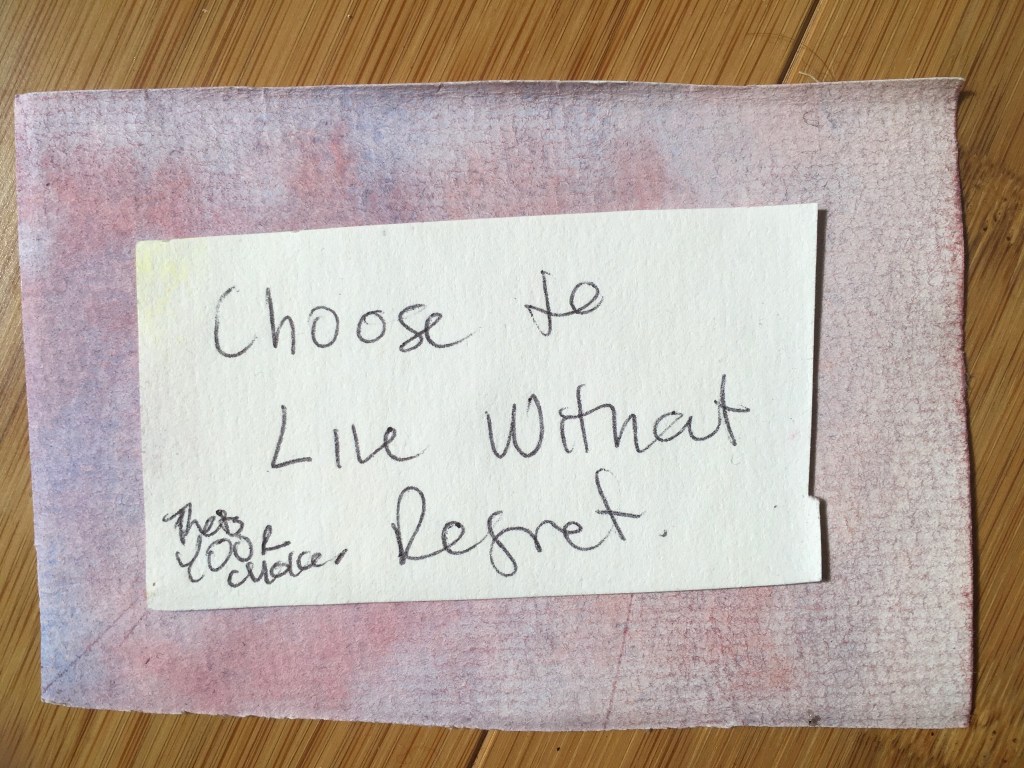
The other day, my 10-year-old asked if she could teach me how to paint wildflowers. While I am a person who delights in all forms of creativity, art has always been the most challenging for me. I can throw some colors on a piece of paper, but ask me to visually represent a specific object, and you’ll receive something that looks like a young child made it. My daughter, however, has taken many hours to master the art of small flower watercolor painting. As she demonstrated her techniques, I followed along but couldn’t quite get my messy blob petals to match her delicately formed ones. “Beautiful mistakes,” we decided to call my stray colors. “Because when you make a mistake, you can keep going and make something new and beautiful out of it.”

I try to be mindful of my language around this topic, as even the word “mistake” implies there is one right way you can get wrong. Some of us learned early: good girls follow directions. If you do what you’re told, you won’t stand out or get into trouble. We can hide behind this facade of who we think we’re supposed to be for decades. What starts as protection from criticism can easily become a cage with no room for individuality or creativity. Keeping up appearances by trying to stay inside the lines can drain our essential life force to near empty.

The old way, the way of perfectionism says:

Get it right the first time. Don’t make a mess. Don’t be a bother.

Really though, haven’t we had enough of this already? Life is messy! It just is. The artistry of my life–my decisions, the ways I fail, the ways I grow–doesn’t match the artistry of yours, and thank goodness! Our messes make us unique. I think of a flower with a torn petal. Shall we toss it to the wind for being imperfectly symmetrical, or will we cherish its fragile beauty? 

If you’re someone who finds her/his/their self caught in this perfectionist prison, what would happen if you fell out of character once in a while? It can be scary to forgo the filter and start responding authentically. Being raw and real, even with self-consciousness, is a service though: we help other humans feel better about making mistakes and being seen too. When we forgive ourselves for not always getting it right, we don’t become more self-absorbed and narcissistic. We become more available. There is more of us to give to others when we’re not busy fighting ourselves. 

Old patterns get entrenched and so often release slowly, with intentional practice. My personal practice lately has been about embracing with compassion, curiosity, and humor what I’ve been calling “life U-turns”. A life U-turn is when we get invested in a new idea for change and go full throttle towards it, only to say “never mind” some steps in. When we do a U-turn, we head back to where we came from with a different point of view. Was it a personal flaw that caused us to move toward that new direction in the first place? Was precious time wasted doing the wrong thing? Or is it possible the “mistake” re-affirmed some essential value we still hold, allowing what was too familiar to be discovered anew. 

Mistakes clarify direction; coloring over the lines helps us think outside the box. I say “Hallelujah!” to this trial and error path forward. As we return to public life, what used to be commonplace feels novel and pretty bumpy. I hope to appreciate even the awkward moments, navigating new boundaries and getting used to each other again. Shall we give it a try, even with our differences? Slowly, let’s stumble forward and rediscover each other’s wholeness again.

Wishing you ever deepening breaths and the gift of seeing beauty in unexpected places,

Julia Aziz

Sign up here to receive these monthly musings in your inbox.


PRACTICE UPDATES

If you’ve been curious about working together in 1-1 sessions, listening to the first 10-15 minutes of this recent podcast interview will give you a better idea of what my practice is like. If you listen further, you’ll also hear stories about how I became a therapist and what working as an interfaith hospice chaplain taught me. While the title of the interview is Grief and Loss, and we do talk quite a bit about death and dying, it’s also about embracing the inherent discomfort of change. Give a listen if you like!

The next season of the Release & Empower Women’s Circle is open for registration, so check it out!

The changes that happen, the changes we make

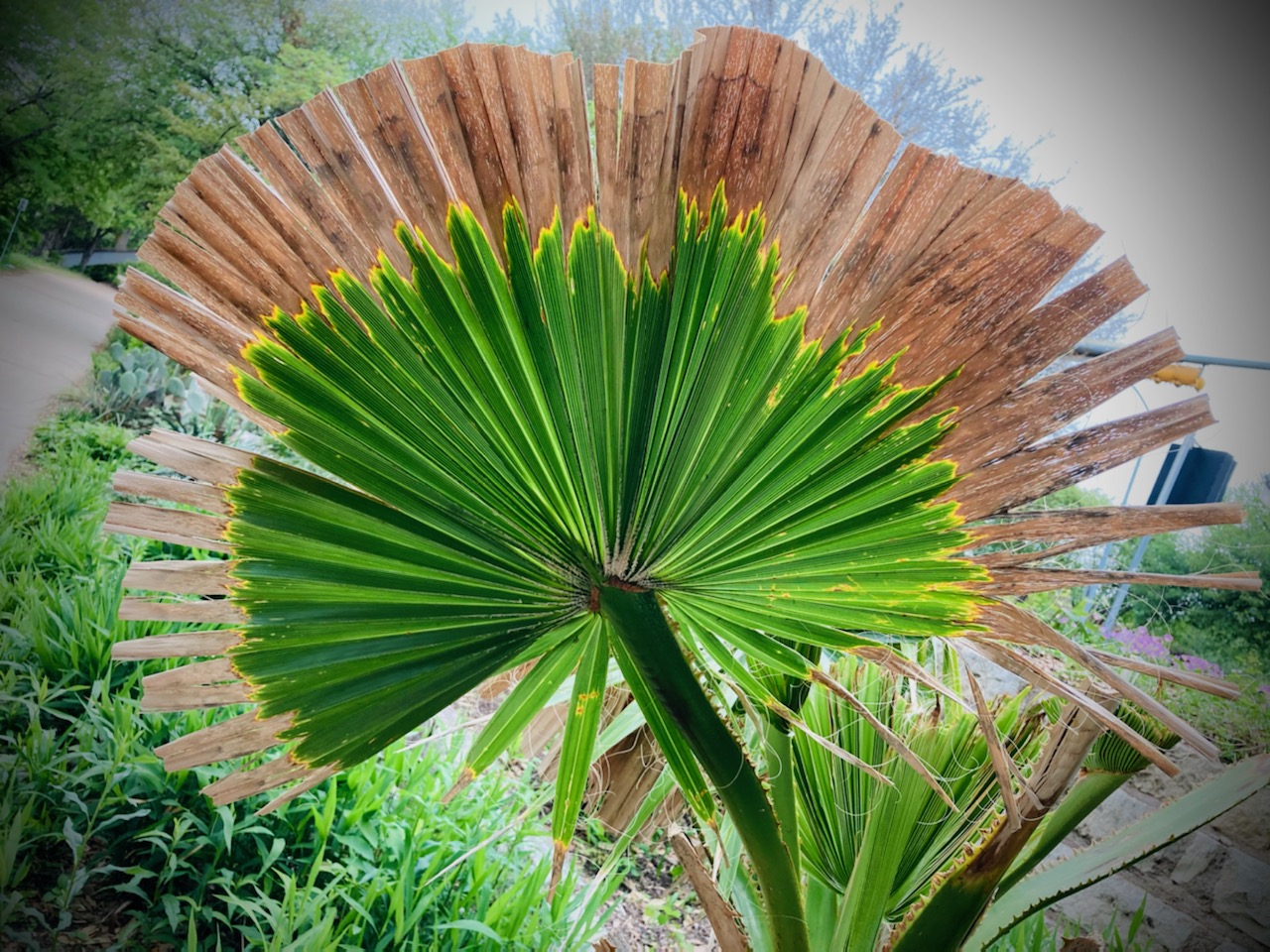
Spring has arrived fully here in central Texas, with wildflowers sprinkling the meadows, trees bursting with green, and birds singing across the skies. Of course this spring feels different from years past, as the death that came through winter’s freeze presents itself starkly alongside the rebirth. The once proud agave cacti are heavy and drooping; browned palm trees struggle to stand while fallen branches rest defeated upon the ground. What’s fresh and new is intertwined with what has perished. Nature seems to be mirroring the paradox of our strange re-opening world, where excitement over returning to former freedoms goes hand-in-hand with the grief and uncertainty that remains.

If you feel both hopeful and unmotivated, depleted and on the brink of change these days, it doesn’t mean you’re doing anything wrong. You’re living through a complex time with complex emotions, and it’s not easy to move forward in ambiguity. Part of the challenge, as I see it, is we haven’t fully shifted out of modern culture’s warrior mentality towards growth. A plethora of personal development and wellness memes tell us to focus on what we want and manifest our truest desires. It’s empowering to realize how much we can affect change through awareness and intention. But as many of the cultures we destroyed and/or subjugated know, growth happens in cycles, with loss and gain inseparable. To support growth, we can observe what’s actually happening and learn to work with rather than against the natural forces more powerful than we are. 

When we push too hard for what we want to happen, we may end up exhausted from the effort of trying. When we don’t do anything because we lack the energy, we may get stuck in hiding rather than take a risk. Perhaps there is another way, a way that accepts and intends, slows down and progresses. With spacious mind and generous heart, something both new and old may emerge, integrating where we’ve come from, where we want to go, and where we actually are.

I’m guessing if you’re reading this, there may be changes you desire for your life. It has been a long hard year, and being shut in and shut down has certainly clarified what’s not working. Maybe some of the changes you’re feeling called to are not quite happening, or perhaps you’re getting waylaid and pulled in unforeseen directions. When confused between growth and acceptance, rather than asking, “What’s wrong with me? Why isn’t this working? or Why do I feel this way?” a better question might be: “What is the very next step for now?” 

The best thing I’ve done for myself lately was to take a day off to get lost in the woods. Wandering without trying to get anywhere, I feel free. It feels like true relief to trust the meandering path that shows itself rather than bushwhacking what might or might not be a shortcut. There is magic in following trails unknown, not trying to figure out the map. And all along the way, it helps to tell the whole truth–to one’s self more than anyone else. It helps to speak out loud to the trees, the river, the birds, or even the dry creek bed, “Show me the way and help me to trust it.”

I hope you’re being gentle with yourself these days, especially when there are more questions than answers. Top of the list for What I Can Do (a much shorter list than What I Am Not In Control Of) is the practice of being tender with the parts of us that are frustrated and confused. A few steps forward, however many back, I imagine that viewed from high above, together we walk the labyrinth of healing, getting closer in, moving farther out, yet somehow being led towards center.

Wishing you some vitality, inspiration, and peace each day, to receive deeply and share wildly,

Julia Aziz

Sign up to receive monthly musings in your inbox and learn about opportunities for self-healing together.

On burnout, waiting, and wonder

You might find this strange and a little gross, but the other day I spent some time watching a beetle roll a little balll of dung across the road. I became fascinated by his perseverance and how he naturally made use of what for most living beings on earth is just poop. I don’t know much about dung beetles, but it strikes me on a metaphoric level how we need this kind of resourcefulness in our current world. What creativity could transform what we must leave behind into something sustainable and life-giving?

The most common refrain I’m hearing from folks these days is “I just wish I knew when this pandemic would end.” There is a lot of sadness with this question, as no one can offer anything but predictions or false promises. Maybe there is a higher authority on the subject though. Nature tells us:

Everything changes.
Change happens on its own time.

Many humans in the modern western world use plans for comfort. We want to know what to expect, and we like to have something to look forward to. In some ways, we’ve forgotten how to wonder, how to give our full attention to the lived experience of now. Perhaps there is some connection here to the dung the beetle was pushing across the road. I wonder, what ways of thinking make us feel worse, and how can we digest and eliminate them for the higher good?

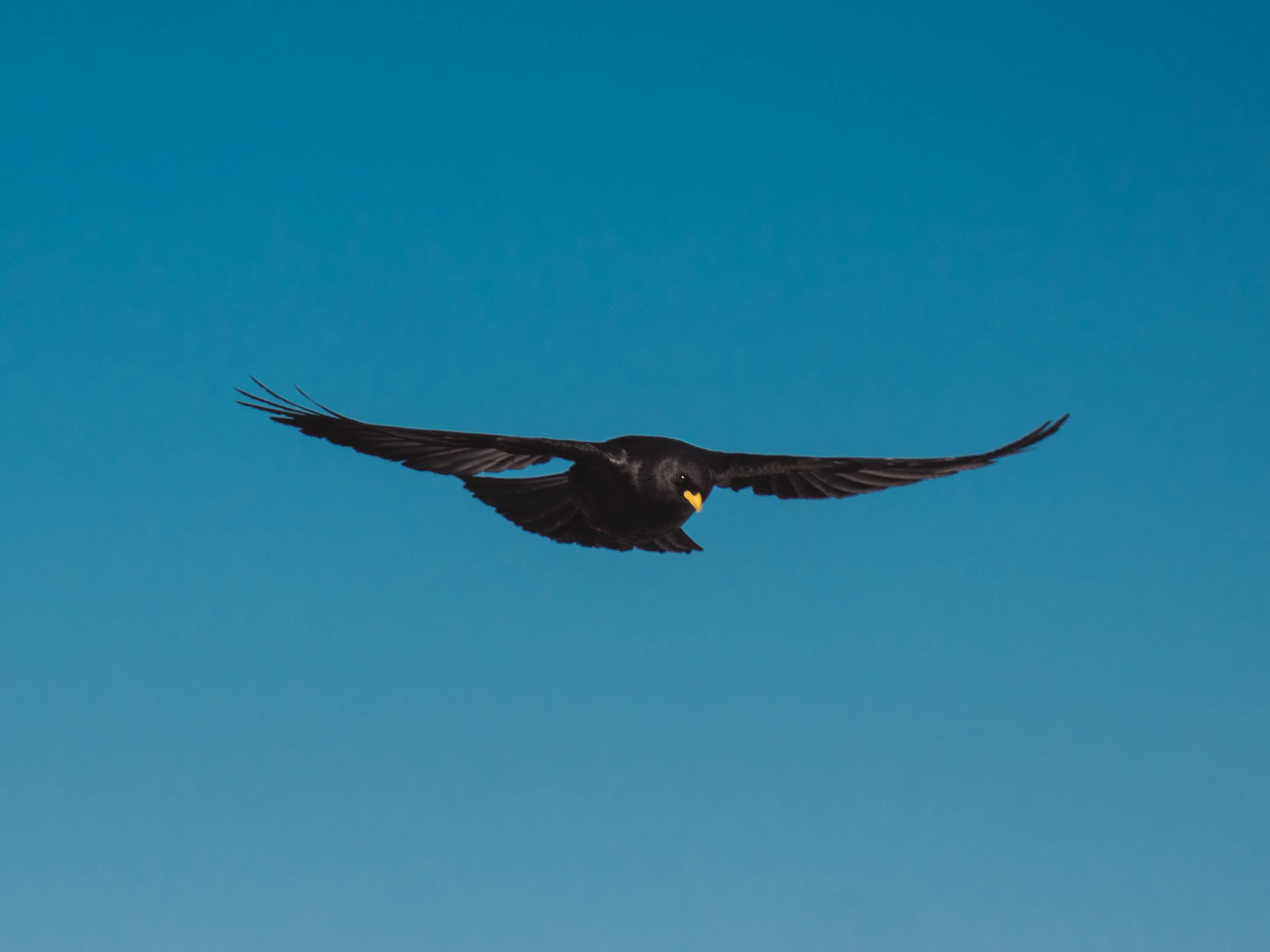
I also spent time last week watching some turkey vultures. I’ve never understood why these majestic birds are so underappreciated and almost feared. It’s captivating, the way they circle the skies above, feeding on what has completed its life cycle here. These birds live because other creatures die. In this, they embody rebirth. The vultures teach us that a new cycle begins out of the one that came before. Everything is made use of here, in this place we live. 

When we let go of the individual pursuit of happiness as such a supreme cultural value, perhaps compassion can be reborn. When the experts can’t give us good answers, maybe we’ll witness a rebirth in honoring curiosity and intuition. As I see it, we don’t need more gurus, we need more empathic, creative people who trust themselves and each other. I’m not trying to draw a silver lining around a very dark cloud. The weariness and the grief are real and everywhere. Still, I believe in us. I believe in our resilience and in our ability to make changes for the better. 

A friend who is more like a sister to me lives in the redwoods in California, and the fires this summer came within a quarter mile of her house. She told me after the weeks of smoke, flames, and devastation, the birds were the first animals to return to the forest. The birds, of course, were the ones who could most gracefully leave and most easily return. Their protection lies not in being the strongest fighters, but in being the lightest on their feet. Who is to say what’s most needed right now in our own personal and collective struggles. All I know is there are some great teachers living amongst us who have been there all along. We may have to open the door and look outside to find them.

May you feel the support of the ground, the possibility of the sky, and the beauty of your own true nature,

Julia

PS– If you’re a helper or healer longing to feel yourself again, consider joining us in the Release & Empower online program for regular mental, emotional, and physical release. It’s self-care accountability and spiritual renewal in good company. As of the time of this writing, I also have two openings for individual holistic psychotherapy. And all are welcome to check out this new home practice support book: When You’re Having A Hard Time: The Little Book That Listens

PPS– Sending some extra love to all those who are grieving the loss of a loved one this year. Big big hugs to you.

How about “I don’t know?”

It’s been interesting to watch all the expertise being shared in a situation that almost no one alive today has ever lived through. Yes, decisions need to be made quickly in a crisis, and we have to use the limited information available to make them. Leaders, especially community-minded, heart-centered, intelligent leaders, are genuinely needed to set the tone, and there’s a lot of societal pressure on leaders to speak with the voice of authority. But what I’m not hearing enough of in the general discourse is, “I don’t know.”

I want to talk about what we don’t know because, the way I see it, the only way to learn is to begin with not knowing. Just imagine trying to speak a new language but instead of learning the alphabet and listening to others, you start pretending to know it. You’d mumble out some gobbledy-gook and wouldn’t be able to understand how anyone responded. How would you ever learn if you didn’t admit how little you knew to start? 

Now some may say we can’t just hang around doing nothing and not knowing. That’s true. There is a lot of service to do and mouths to feed. Yet, can we also be honest with ourselves and each other about being in a place of uncertainty? Yeah, it’s uncomfortable. It also just is. The place of not knowing is dark, vast, and full of potential. It’s an important place to be, even if just for a little while each day. It is where creativity, intuition, and wisdom originate. It is where control is released. Just because we can’t see well here doesn’t mean something important isn’t happening.

I’ve been obsessed with the lower edges of tree trunks lately. I pass by trees on my morning walk, and I gaze at where they meet the ground. If I hadn’t learned better, I would think those big trunks just popped out of the grass and reached into the sky. But of course their roots lie below, maybe even directly beneath the ground I walk on. There is so much beyond what we can see. We are, after all, just little ants on a big anthill. So why pretend otherwise? 

We start with not knowing. And then perhaps we ask, what is the very next right step? That may be all the truth currently available for now.

I haven’t written in a while because I’ve been working on a couple projects that I hope will be of service and support to you in the days to come. I’m not quite ready to talk about them yet, as I want to respect their particular life cycles, let them grow with their own natural timing beneath the surface a little longer. How any of it unfolds, your guess is as good as mine. What I do know is this: 

It’s OK to be unsure and to just take one step, then the next. 

Clear knowing comes from neutrality, not fear. 

Seeing the humanity in others will never go out of style.

I wish you waves of relief in the “I don’t know,” with plenty of curiosity and listening. Reach out for support if you’re struggling though. You’re not living in the uncertainty alone.

Much love,

Julia Aziz

Sign up for my mailing list and receive a few simple practices to feel more connected.

What matters?

The other day, I called up a dear friend and colleague who has survived four near-death health emergencies in the past decade. After a little check-in, I asked him, “So how are you feeling about your mortality these days?” We both laughed at how overly direct my question was. In typical Robert fashion, he then replied, “Well, I feel I’ve been doing my part by not using toilet paper.” Then we laughed again. 

Most people don’t want to talk about death. It’s not small talk, and the general attitude seems to be “why dwell on such things.” Well, dwelling is certainly not helpful, but taking an honest look is. While some people have been facing terminal diagnoses for a while, we now have a collective situation where it’s hard to ignore the possibility that death could come sooner rather than later. This little heads up doesn’t necessarily make grieving easier, but it is a gift. When we understand there may not be as much time left as we hoped, we might take the risk of being authentic.

Some masks are being put on, but it’s time to take another kind of mask off. While we’re waiting to see how many losses we’ll experience, there is time to be real. What needs to happen for you to feel at peace with the life you’ve lived? If there’s something left unsaid or undone, what a great time to either do it or forgive yourself for letting it go. Many people who know they are dying will say they wish they took more emotional risks in life. If you let yourself be seen, and then end up with a lot more time here after all, wonderful. Maybe taking those risks now will help you show up and live in a way that reflects what really matters to you. This is the paradox, the new life that comes from death. It is the clarifying nature of a disorienting transition.

Humanity as a whole and each one of us individually have come to a crossroads. Change is happening, but the bigger changes are not yet clear. We will not all continue in the same direction, but we are still here at the crossroads right now. So what do we do here?

You tell me what we do. You’re doing it right now. There are all sorts of things to do at the crossroads. Like this song by Taya Ma says, the wise woman does it all. She cries. Prays. Rants. Shakes her hips at the crossroads. 

The beautiful and the tragic are all wrapped up into one, as they have always been. It’s OK to grieve. It’s OK to receive. It’s a pleasure to laugh. It’s a relief to cry. And (whisper voice) it’s pretty awesome to roar at the top of your lungs when you’re not hurting anybody at all. 

Whatever you’re thinking and feeling, I hope when you see yourself in the mirror, you look beyond appearances. Maybe send some tenderness to that very human being going through a lot of change. 

With you, in it,

Julia Aziz

PS- If you or someone you love would like to talk more about things that matter to you, let’s do that. I do 1-1 sessions phone or video. Also, I’m setting up a Free Release & Empower Workshop for therapists, moms, and all those providing emotional care to others right now. Let me know if you’d like to receive the invitation and video link when it’s ready. 

When people feel and think differently than you

We’re having different experiences of what’s happening, and it’s causing some highly volatile emotional weather out there. Clearly we are not all in the same health/economic/job/home/legal status/mental health situation, but also we process and adapt differently. I’ve shifted in my understanding a lot recently, often after reading or talking to someone with a viewpoint I hadn’t considered. It’s a good thing, different voices. It’s also easy to get pulled into an emotional landmine you didn’t mean to step in. 

I’m seeing people volunteering to help and coming together, but I’m also seeing a lot of judgment, blaming, and shaming going on. Whether it’s a loved one who isn’t being as sensitive as they could or a “look on the bright side” post that hits a nerve, it’s a triggering environment. So what do we do with all this activation?

Well, first off, we know it’s often best to step away and not communicate with anyone for a bit. I am mom to three children, so trust me, I know that kind of hermitage is not always possible! Taking recovery time before responding is key though. So is remembering that while we may be triggered, it doesn’t mean someone is to blame. If we feel riled up, it is our responsibility to feel, soothe, and care for ourselves in this vulnerability. It is not within our wheelhouse to change anyone else’s mind or fix the way others feel.

If self-soothing isn’t your MO and you often harshly judge yourself, I recommend placing a hand on your heart and trying out some of these phrases when you feel the trigger coming on:

I love you, and I know you’re doing the best you can. 

I am here for you every step of the way. 

I know this has been really hard for you, and I am so proud of you. 

This is a humbling time. None of us have all the answers. Good news is: none of us ever did! Giving up the attempt to control, surrendering to “I don’t know,” making space for all the feelings to be felt, allowing others that space as well—this is what we can do for ourselves and for each other emotionally. 

It’s OK if you’re scared right now. It’s OK if you’re thriving and empowered. It’s OK if you’re furious. It’s OK if you’re despairing. It’s OK to have all these emotions and more in the span of one hour. There is plenty of space for feelings to be owned, felt, and transformed.

I wish you so much gentleness from your own heart. The more you take care of your own well-being, the better all our interactions are. We can do this, together. 

xoxo
Julia Aziz

PS–If you’d like further support, please sign up for my newsletter or check out my services here.

Wisdom From Those That Came Before Us

I don’t know who wants to hear this right now, but I hope you will share this with anyone who needs it. I promise you, there are people you love out there right now who are scared, and they don’t feel like they can talk to anyone about what they are truly afraid of. You probably also have loved ones in high risk groups who are not afraid and who are ready to talk, but they may be quite lonely because no one will listen. 

As many of you know, I used to work as a hospice chaplain, visiting people in their final months, weeks, days, and hours, as well as sitting and praying at the deathbed after a loved one’s passing. I’ve had terrifying experiences as well as profoundly blissful ones, but every single encounter with death has been humbling. There were times I felt the pull of dark energies nearby and times I was floating in bottomless peace. Yet one of the most important insights that came from those families I had the honor to witness and care about was this: much of the fear of death is really a fear of grief. 

Where there is love, there is loss. Where there is loss, there is love. This is what it means to be a human being. This is what we signed up for. There is no need to wait until you or your loved one or the whole world is in crisis. Healing can happen now. Maybe not curing, but real healing. We can forgive ourselves, we can reach out and protect each other, we can draw boundaries and forge a new way, for as long or as short a time as we have left. 

I’d like to share with you again a Hebrew song from Kol Nidre, a holy of holy nights where all the individuals in the community together release unmet expectations, forgive broken promises, and start over completely. It has just two lines:

Kol ha-olam kulo gesher tzar m’od 
V’ha-ikkar lo l’faheid k’lal


The first line translates as:

“The whole world is a very narrow bridge.” 

We are being slapped in the face with this reality right now. The entire world is a very narrow bridge. Everything can and will be taken away from us. Eventually, what we have left is the spirit of who we really are—the pure essence only–and absolutely nothing else. This is nature. This is the existence we know. 

We can’t stop at just the awareness of the narrow bridge though! Stopping here has caused, at least in my lineage, chronic anxiety, worry, and fear for generations, a collective PTSD from a long history of sudden loss. No, we must absolutely remember the second half:

“The essential thing is not to fear at all.”

Courage. 

Feeling all the feelings, even and especially the grief and the fear.

Letting those feelings pass and moving forward.

Knowing necessity to be the mother of invention and finding creative solutions.

Taking the next right step in the direction of wellness and peace.

Changing alongside with change.

So yes, nothing feels secure. But what if we could dance across that narrow bridge anyway? I’ll do a little hip shimmy, maybe you’ll do the cha-cha. Both of us with our eyes wide open, balancing on one foot, then the next.

Fear, I see you! Fear, I hear you! Thank you. You remind me: I am choosing Love.

Always,
Julia Aziz

PS-I’ve been feeling called to write more in these times of isolation, so please do share this sign-up link with friends and family who may need some alternative messages coming into their inbox.  

PPS- I also write about this song in my early motherhood memoir of anxiety and personal growth, if you’re looking for reading material. 

Coronavirus: The Teacher

Friends, we’ve been living like automatons in systems we expected to function like clockwork, and the illusion is breaking loose right now. There is a lot of anxiety about change, death, losing loved ones before we had more time with them, being bereft of resources and assistance when we need it most. Fear, grief, and a control pattern that is the hallmark of the modern western world is being played out on the big stage right now. There is so much to learn here.

The mind wants to understand, and when it can’t, it seeks to control. That’s OK, it’s just what the mind does. Fortunately, we don’t have to base our command center in the intellect. Here are a few opportunities my heart sees coming along with death, loss, health and mental health crises, quarantines, cancellations, and financial meltdowns:

Interpersonal Courage

Whenever things seem uncertain and falling apart, it’s a perfect time to clean up your side of any relationship messes. There’s a process to this, of course, and support if you need it. But the gist is this: Do what you need to do, and say what you need to say. It’s so important to feel at peace in your own heart, knowing you did what you could do. From my experience working with the dying and terminally ill, I can tell you this: forgiveness is medicine for humans facing their mortality. Forgiveness can mean setting boundaries, ending relationships, and/or re-connection–whatever happens, the past is accepted and left in the past. What’s most important is clearing the mental, emotional, and energetic space inside so there’s room for more love. We all take our leave of this life eventually, though I am not bringing this up because I think we are all going down with the ship today. I am saying this because this is the healthiest way I know how to live what days we have left here with each other.

Adaptability with Generosity

Louise Liller, one of the most adaptable, generous people I know, recently wrote: “There are things we do for ourselves, and there are things we do because we live in community with other people. We wash our hands, not only for ourselves, but for others who may have weakened immune systems. I wash my hands for my friend who just had cancer removed from her brain. I wash my hands for my teacher who is in a coma and has pneumonia. I wash my hands for my childhood friend who was born with a genetic disorder that affected her lungs. I wash my hands because I care about other people.” There are easy changes we can all make to help one another. Washing hands, not taking all the supplies in the grocery store, calling elderly friends and anyone who already lives in too much isolation, just to lend a hand or let them know we care: this we can do.

Appreciation Celebration 

When the unknown threatens to break you, a little appreciation celebration may lift and strengthen your spirits—even if you are the only attendee. For me, this often looks like building a fire, beating a drum, singing and dancing, sharing some good news with my main support people, going for as long a hike as possible, or just checking out a flower. 

Dearest fellow humans, we are in this together. The way we’ve been living has caused us to forget how much we depend on nature, and how much we depend on each other too. Maybe now we can remember.

With the kind of hug who knows you’re in there,
Julia Aziz

For some comfort in the storm, sign up for my mailing list.

PS-If you need help releasing stress and finding your center again, please reach out to me or to someone else you feel comfortable with. In addition to weekly and biweekly holistic psychotherapy, I also offer group work with guided writing, meditation, sound, and movement. Regular emotional release is like drinking water for your body. Our feeling bodies need the flow of emotion coming through. For me, this work is best done through the physical body, in the spirit of compassion. 

Building immunity to the worry virus

Nearly everyone I talk to these days is feeling more anxious than usual, and what’s “usual” now is already a state of mild tension. Worry is highly contagious, and while the gentle souls with sensitive nervous systems are particularly at risk, most people are at least slightly vulnerable. Worry is not just a side effect of what’s going on in this world. Worry itself causes all kinds of health, mental health, relationship, and financial breakdowns. I am not suggesting you start worrying about how much you worry! But it’s time we start talking about the importance of clearing out the junk in our minds and creating health and balance there instead.

When bad things happen, and those bad things threaten to become more powerful, it’s tempting to go into major contraction, to hunker down and hope to be spared. But we all got on this roller coaster ride of life, and we all know being born means someday dying. So how do you want to be while you’re here in these times of uncertainty? How do you want to live this? If you don’t want worry to steal your joy, it’s essential to build immunity with embodied practice and mind-style change.

The first and most obvious preventative measure is to take in only as much information as you need to make good, practical decisions, and then sign off. Beyond this primary discipline, here are a few reminders for immunity-boosting:

(1) Regularly check on the state of your nervous system. Is your fight or flight switch stuck in the “on” position? If so, turn it off. Keeping that switch on when there is no immediate, present danger is like leaving the lights on in your house when you leave. The lightbulbs will eventually burn out, and you’ll have wasted a lot of energy. Just imagining the switch-off is sometimes enough; other times breathwork paired with intention will do the trick. If you don’t know how to meditate or ground yourself, it’s easy to learn. Just google or reach out for individual guidance. (Side note: for maintenance, no fancy therapy can replace the essentials of movement, rest, digestion, and touch.) 

(2) When worry takes hold after hearing about an epidemic, violent shooting, natural disaster, politics, or something in your personal life, make two lists: What I Can Do and Out of My Hands. Now you’ve got a To-Do list to act on and probably a much longer list you can happily be freed from. I personally feel such sweet relief when I catch a thought about something I can’t control and say to myself, “Thank goodness I don’t have to worry anymore.” On a related note, if you experienced trauma or negative conditioning from institutionalized religion, and it’s turned you off to the concept of prayer, maybe it’s time to reclaim your own connection to everything you can’t understand or control. Prayer doesn’t mean you need to believe in some kind of man in the sky or creed. Prayer can be the act of humbly recognizing you are but one small being in this unfathomable universe, affirming to yourself, “It’s OK. I can not fix this.” Afterwards, turn your attention to bodily sensations and your environment in present time. This is where the real action is taking place. Worry is always a game of negative make-believe.

(3) If you have any subconscious or conscious belief that worry is keeping you safe, question it. Have the bad things that happened to you been things you worried about beforehand? If so, how did that worry protect you when they happened? Who would you be without worry? When the analysis paralysis of those questions tires you, go have some fun. The best remedy for too much seriousness is some absolutely nonproductive, only-for-the-joy-of-it playtime. Tragedy desperately needs its comedy. 

Collectively, we are experiencing a flare-up of an already chronically inflamed condition. We are not the only people in history to go through turbulent times, but modern Western society has left many feeling separate and alone. We have the opportunity now to reconnect, to remember the preciousness of this short life, our loved ones, and all the many luxuries we have taken for granted. The harder it gets out there, the more softening we need with each other. You can make a difference for yourself and everyone around you. People with courage and calm nervous systems are medicine for this crazy world. 

Wishing you an overflow of relaxation and ease,

Julia Aziz

Sign up here to receive these reflections in your inbox.


PS–If you’re ready to set some boundaries with anxiety and worry, you can check out my holistic psychotherapy services or the Release & Empower Women’s Group Program. And if I’m not the right fit for you, there are many other healers out there. What matters more than any particular certification is that you feel like you can be yourself in their presence. So if you haven’t found that support yet, don’t give up! Sometimes it just takes a little while.

Who do you want to be in the chaos?

Lately, I’ve been sitting with this question. I started contemplating it when a series of events involving structures crumbling, health breakdowns, and fallen leadership occurred in my personal life within the span of a few days. There’s nothing particularly unusual about this kind of chaos right now. The disruptive energy of change is here. There is no avoiding it. When everything starts falling apart at once, my automatic response is usually multi-tasking, over-helping, and overdrive. But that sort of high-speed crisis management is not really the best I have to offer, and I’ve been learning how to consciously shift out of that pattern more quickly. It’s actually not who I want to be in the chaos. 

I was sitting in the silence of Community Wellness Hour a few Wednesdays ago when the answer to my question came.

It was a tree.

A huge redwood tree, rooted in the mountains for more than a hundred years, reaching into the sky with branches that dance in even the strongest wind. 

But that’s not it!

Also a bird in that tree.

A bird like an eagle, or perhaps a phoenix. A bird who soars above, seeing what only one with such freedom and perspective can see.

And…

A nest for that bird in that tree, made out of what is available. Holding what is most precious.

A safe place for the vulnerable growing strong.
 

There’s a whole lot going on out there, and in here. Change, especially big change, is messy. And change at a large scale is kind of terrifying. When the structures, the leadership, and the systems fall apart, as far as I can see, there is only one way to turn: inside and to each other.

This is exactly why I started the women’s release and empower group. If we don’t give ourselves permission and space to release the stress that builds up, no one will. We have to move through the chaos we’re absorbing so we can be strong, clear, and wise when we need to be. No one–no therapist, no doctor, no teacher, no guru–can do this for you. They can guide you on the path, but only you can walk it. We need to do our own self-healing work, and we do it best when we’re together. Only then can we show up with the kind of loving presence and courage that is needed in this crazy world.

One thing I know for sure: everything can fall apart, and you can still have your heart. There are a thousand examples of this. Take Victor Frankl of Man’s Search for Meaning or Anita Moorjani of Dying To Be Me. Take every brave person who keeps their compassion at a job in the hospital, the prison, the social service agency, the shelter, or the walk-in clinic. A holy mess is happening, and it may become the norm for periods of time. So I ask you, who do you want to be in the chaos? We are all needed here.

With so much faith in you,

Julia Aziz

PS– If you’re curious about the women’s group program, check it out at this link: Release & Empower. Or, if you’d just like to stay a little more connected, sign up for my mailing list here.