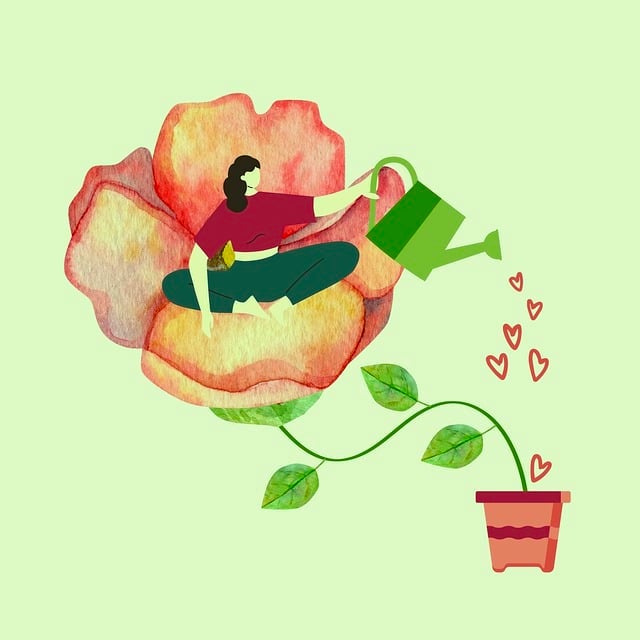
When you need to push through and keep going

“I’ve got a lot going on.”

“I may not like this process, but I need to push through.”

“I would love to take a break, but there’s too much to take care of.”

These sound familiar? Whether it’s a crisis, a big life change, social action, or relentless responsibilities, sometimes we need to answer the call of necessity–no matter how we’re feeling about it. The question is how to push through with vitality, rather than straining to the point of collapse.

It reminds me of a time when my seventeen-year-old sedan gave up on the hill of a highway frontage road. Cars were speeding by, blaring their horns, but there was no hope of revival. Luckily I was able to coast down to the exit, landing on the side of the road. That car had had enough. It had been pushed too far and too long, without the maintenance it needed to keep going. 

No one wants to be that old car! If we’re going to do more–for our work, for our families, for our communities–we will need to do more to sustain ourselves too. Sure, we’d all prefer a break to a breakdown. But when life is too full to take time off, we might have to take what I’ll call “time in.”

“Time in” might look like purposefully moving a little slower than our regular pace, especially during a busy day. Listening to a bird sing during a rare pause in the action, rather than checking email. It’s like the old Zen teaching on lengthening your meditation when you have less time to sit. Need to do more? Do less too.

“Time in” might also look like an intentional mini-breakdown. In a safe space, a good cry, a wild tantrum, or a full somatic anxiety release can relieve some of the tension that comes from having to keep it together. A little rest afterwards, and it can be just the right medicine for getting back up and keeping on going.

But hey, sometimes self-care can feel like just one more thing, so if that sounds like too much, it’s not necessary. The pressure to stay on top of everything is like the pressure of those passing drivers blaring their horns: it’s not going to solve the problem, it’s only going to stress us out more. Better to give up on being superhuman!

When the long road ahead is worth the trouble, we’ll each find a way through. 

I respect that there are times in life that require more of us. It can even be empowering to know we can step up when needed. Other times, it just doesn’t work to say “C’mon, get up, you can do this! What do you need to push through?” In these situations, maybe there’s a downshift, a “Here I am. Here’s my capacity. Now what will I do with it?”

Wishing you replenishing rest stops wherever you can find them, and a bit of coasting downhill too, 

Julia Aziz

PS- Need some supported time-in? Check out my individual therapy or the Release & Empower Women’s Group Program. And be sure to sign up for my mailing list; you’ll receive some free, easy ways to love yourself through all the ups and downs of life.

Image by Tobias Brunner from Pixabay

New podcast interview is up!

This podcast speaks to mental health, healthcare, and wellness professionals and is a little different from ones I’ve done before. Dr. Moss asks a lot about how I take care of myself while taking care of others. We talk about:

  • Being a helping professional in different realms and my personal approach as a therapist and ceremonialist
  • Learning to access and honor what the body and spirit needs 
  • Balancing self-compassion and self-discipline
  • The power of simple practices and simple truths

You can give it a listen here:

The Healthy Healer Podcast with special guest Julia Aziz, LCSW-S, OIM

Listen on Apple, on Spotify, or on any of your favorite podcast platforms.

There is no one-size-fits-all when it comes to living a life. Though we can learn a lot from each other, in the end, each person has a unique history and thus a unique path forward. As you hear more about my process, I hope you feel inspired to trust what’s right for you and bring in more of what supports your own balance and well-being.

With respect and care,

Julia Aziz

To hear about more interviews, articles, and resources, sign up for my newsletter here.

Doing holidays like Mother’s Day however you need to

There are two reasons I usually don’t post on Mother’s Day: (1) In my own home life, this time of year tends to feel like a parenting marathon, without much room for extra writing. And (2) I am sensitive to the reality that many of my readers are grieving on this day, whether that be for their mothers or for children they’ve lost or didn’t have. A simple “Happy Mother’s Day” message never feels right. But I gave it more space and decided to write this year because I think we could all use some deeper acknowledgement.

If you’re a mom having a hard time staying centered, perhaps without enough room for true self-care, please see my recent post with some free gifts for moms. There you’ll find a recorded talk about on-the-go, in-the-moment emotional release tools and a book guide with contemplative practices. These are offerings to you, dear mama, with an underlying wish for you to receive, receive, receive and let your needs matter. Let’s celebrate not only the essential role you’re playing in our society but your humanity too!

If you may be grieving on Mother’s Day, know that the longing and loneliness of these sorts of holidays is felt with you by so many others across the land and throughout generations. I’m not going to try to sugarcoat what you’re going through though. My wish is for you to receive the space you need to honor your loss(es) and your feelings without comparisons or pressure of any kind.

If you feel ambivalence towards your mom or Mother’s Day, this goes for you too–relationships aren’t black and white, and you feeling all the grays in between is honest and real. (By the way, I know it’s not a popular thing for a therapist to say, but I’ll say it: if you need distraction and avoidance, that’s completely OK too!)

If you’re doing alright but haven’t had a moment to think about Mother’s Day, I wish you self-acceptance and grace in this busy spring. Whatever happens, I hope you get to not plan it 😉

Mother’s Day can wonderful, and it can also be a mixed bag no matter how your life story has played out so far. But whether you feel disappointed and unseen or grateful, loved, and nourished, it’s still just a day. I hope you take this day and use it however you want. I hope you embrace yourself in all your complex facets, shadow and light–the whole messy picture beyond the roles you play in others’ lives. May you gift yourself complete permission to feel however you feel and do things your own way.

In honor and celebration of our diverse human experiences, with love,

Julia Aziz

Let’s stay connected! Sign up for my mailing list here.

On getting triggered: Anger, guilt, blame, and the feelings we don’t want to feel

I’m curious, who showed you how to feel and process anger in a healthy way?

(Just kidding, that’s not a fair question!)

Depending on our background, we may have learned to numb or suppress negative emotions, beat ourselves up, or lash out, but it’s pretty rare for an adult reading this today to have grown up in an environment that modeled well how to work with feelings like anger, guilt, shame, or fear. It’s something we as a species are still learning. We continue to trigger negative emotions in each other all the time though–that’s just being human and living in society with other humans. Part of growing into adulthood is learning how to respect what we feel while also respecting other people’s experience, and while that may sound extremely basic, it’s often extremely missing.

You may have heard the term “shadow work” before, and it may mean something different to you than it does to me. For simplicity’s sake, I’ll define it here as finding a way to work with the thoughts, feelings, and parts of ourselves we’d prefer to banish to the basement of our consciousness. Let’s say you read, hear, or see something that gets your ire up. You begin to look for fault, but rather than inwardly or outwardly blaming (or avoiding), you pause. You say to yourself, “Hey, let’s not focus on who’s wrong right now. I’m more curious about what’s happening inside you?” Maybe you notice a little voice that’s feeling scared or lost, along with some tension in the body. And you don’t try to do anything; you just be kind about it. You offer empathy and compassion to yourself the way you would if a dear friend was sharing something similar. Giving attention to thoughts, feelings, and sensations with care in the heart, you may find yourself breathing more deeply and noticing more nuance. Maybe there is something to say or do now or maybe not. At some point, you’ll know what the next step is for you.

This is just one of many different ways we can work with triggers. Shadow work helps us to be less controlled by our conditioning and inner demons, so we can return to our truest essence. The big triggers need big patience and support. And if we’re often holding space for other people’s triggered feelings, making room for our own is doubly important.

Anger is part of a guidance system–it points us toward boundaries that need setting and power that needs rebalancing. Once we’ve moved through its fire, we can use it as fuel for change. Rather than asking who is to blame or getting stuck ruminating over what other people are doing, we might look at questions such as: How can I accept my whole self, with all my feelings and history, and take courageous action from a place of centered clarity? What is my unique role here to play in the bigger context? As social beings, we have the power to regulate and disregulate each other. In tending to ourselves and showing up again to the complexities of living in society, we make a difference. 

The quieter voices in the room, just like the quieter voices in ourselves, have some important things to say. Listening and learning, we evolve together.

In the school of life with you, in gratitude for our connection,

Julia Aziz

Sign up for my mailing list to receive reflections like this in your inbox.

PS-If you need at-home support with the kind of shadow work we’re talking about, try the simple practice outlined in this little book. It’s an affordable, accessible resource for anyone feeling challenged by negative emotions and looking for a new way.

PPS-Here’s a song by the Middle East Peace Orchestra for more support to feel.

We each have our own role to play in the emergence of a new way. May those who are struggling for their lives, traumatized, and grieving be protected, supported, and loved. May the wisdom and power of our hearts prevail.

When you give your attention to everyone else first

Do you ever feel upset at people for asking too much, but you keep those feelings to yourself and do what they ask anyway?

Do you procrastinate what’s important to you while continuing to meet others’ expectations?

Do you sometimes feel unseen and taken for granted?

Maybe when you were young, you felt all the feelings in a room, and you took on the responsibility of making everyone else feel comfortable. Maybe you found security in caretaking those whose needs seemed to loom larger than your own. Now mind you, these aren’t bad tendencies; our society as a whole sure could use more sensitivity and caring about each others’ feelings! But when caring becomes people pleasing, it gets out of balance, becomes inauthentic, and can result in major burnout when one person is doing all the accommodating. So how do we unlearn the old patterns while holding onto our hearts?

In my experience, people who were conditioned to center their orbit around others often need more permission to value themselves. I’m actually not talking about putting on your own oxygen mask first or any other “me first”. “Me first” can get just as unbalanced as the “you first” culture of helpers and caregivers. You don’t have to stop caring for others; you can include yourself amongst the people you care for. If we become part of the “us,” it’s not about my needs vs. your needs. It’s about expanding the heart space for all. 

Like trees in the forest, we grow best as humans in community. Together, we re-discover our resilience and the healer within who knows just what to do.

Grateful to be in connection with you,

Julia Aziz

*The challenge of shifting from “you” to “us” is that past conditioning can have quite a stronghold, especially when old triggers persist and new patterns aren’t yet firmly rooted. That’s why making changes alongside other people is so effective. Just like you might go to a fitness class if you were trying to get in better shape physically, if you’re unlearning people pleasing, perfectionism, overdoing, and other accommodating patterns that lead to burnout, a group program like the Release & Empower Women’s Circle can support a real shift. More details on our next season can be found here.

Sign up for my mailing list if you’d like to explore similar topics together in the future.

Image by Rosy from Pixabay

New Podcast Interview on Self-Healing, Spirituality, and Therapy

“I just gave and gave and gave. And now you’re telling me I’m the one inside, I have to heal myself?!?”

If you spend time helping or caring for other people, you may resonate with this question Sindee posed to me in our recent conversation about self-healing. It’s a valid point! How do we show up for others as well as ourselves when we’re depleted or going through our own struggles? I hope you give this interview a listen. I so enjoyed discussing shifting perspective in how we approach service and the importance of nourishing our own spiritual lives. 

Though this interview is part of a therapist podcast, its underlying message is truly for any individual who is often supporting others. I hope you know how much you matter–not just because of what you are to other people, but because you exist here too! 

With love,
Julia Aziz

Sign up for my mailing list and receive more free content of this ilk 🙂

When you’re unwell and people still need things

Have you struggled to tend to the needs of patients, children, clients, or elders while you were going through your own big or small health crisis? I share these inquiries with you today in honor of all the caregivers contending with illness or pain, whether there’s cancer, autoimmune disease, recovery from an acute health emergency, long or short covid, or the many other viruses and bacteria we experience living in a body.

Listening in

Our bodies are always talking to us, and those of us with particularly sensitive nervous systems are privy to a whole lot of conversation. Listening to the body, like learning any new language, requires some persistence and patience. One message that’s often loud and clear though is “slow down and rest”. Sometimes the rest we need is much deeper than a temporary pause, and it questions the very pacing and choices of our lives. We might ask, “What is this illness slowing me down from, and what is it asking me to change?” We may not like the answers to these questions, but we can still tell the truth to ourselves and take some time before choosing what to do about it. 

My new favorite word: Divest

Some humans could use a little more empathy, but many kind caregivers are actually learning to divest. Divest from caring quite so much, divest from being so acutely tuned in to other people, divest from the stories we tell ourselves about how we’re not doing enough. And let’s not forget divesting from standards that are too high to maintain when we’re ill. In divesting, we might ask, “What can I not do? What can be postponed? What could someone else do?”

Asking the now 

Have you ever gotten overwhelmed by the multitude of supplements you should be taking, practices and exercises you should be doing, and all the doctors and healers you should make appointments with? That overwhelm matters for your well-being too. Taking a slow breath, we remember that the body asks for what it needs in the now-time. Can responding to that one need be enough, just for this moment? What would it feel like to trust in taking one step at a time?

Compassion is not complete if it doesn’t include you

Being sick can make us cranky, fearful, zoned out, and despairing. It’s ok to be angry; it’s ok to grieve. Sometimes rather than a pep talk, we just need someone to say, “Sweetie, that totally sucks. It’s so hard. I love you.” That someone might need to be you–whether or not you’re near people who care. No one is going to know just what you’re going through like you do, and the voice of your caring heart needs more airtime than any inner critic. 

Illness making you matter

If you’ve been centering your life around other people and giving less to your own body and spirit than you do for everyone else, illness may be asking, “What about you?” We can’t just keep grasping at crumbs and expect that to be sustenance for caregiving. It’s OK to be high maintenance, to need a lot of emotional and physical self-care in order to continue to be of service to others. It’s also OK to dream your own dreams sometimes. You exist here too, and if there’s one person you are most responsible for, it’s you. 

Wishing you gentle loving kindness, tons of patience, outrageously vibrant health, and a whole lot of letting yourself off the hook.

Warmly,
Julia Aziz

Sign up for my newsletter to receive occasional reflections in your inbox.

More encouragement for rest:
Rest is Resistance book by Tricia Hersey
Podcast interview on Time Management for Mortals
Beautiful Chorus song we’ll be resting or moving to in the women’s circles this week

On groups and the hesitation to join them

Many helping professionals, moms, and other emotional caregivers are craving connection with like-minded humans, but have a real hesitancy about groups. Sometimes this is due to past trauma in group settings, in spiritual spaces, or with women in general. Other times, it’s because when you’re often in a helping role, it can feel particularly awkward and scary to be vulnerable in a group. You may not be used to it. People tend to look to you for answers, not questions. Also, you may crave time to yourself and generally feel tired by social situations.

The call to go inwards and feel whole within one’s self is real, and so is the desire to deeply connect and be seen. 

The Release & Empower Women’s Circle was created to support women in this paradox. Here’s what I’ve been saying in response to this common concern women often share before they join:

  • This is pretty much a group designed for introverts that don’t join groups. There is absolutely no expectation to perform; it’s actually about unlearning the conditioning that makes us feel like we have to. Much of what we do is experiential mind-body practice. The sharing component at the end is purposefully held within a brief time container for each person, and no one comments on what you say or gives advice or opinions. It’s an opportunity to play with your own comfort zone, with zero pressure about how much to share. This permission is an important foundation of the work, and what makes it freeing for so many women who are accustomed to always tuning in to others’ needs.
  • The online experience has evolved and become a great fit for this group. Learning to hold space for one’s self is super important, and this work is all about letting yourself be cared for while you do what you need to do. A certain level of anonymity that comes with online experiences is actually freeing here, allowing everyone to overcome barriers to expression slowly and gently. As a participant last year put it: “I could not have predicted how connected I have felt to this group of women. I loved the rituals we incorporated and the power of the many forms of expression and communication we explored together that had very little to do with words. I was able to get in touch with practicing showing parts of myself with others and truly trusting that what I shared would be met with loving kindness and acceptance. Really this group is the power of love in action.”

I think we’ll always need 1-1 connection and support. But the truth is, many of our personal struggles have collective and systemic roots. We can’t fully heal in isolation, as our problems are not as separate as they seem. More so, if you’ve never experienced the exponential power of healing that comes with group practice, I warmly invite you to give it a try.

Always with love,

Julia Aziz

Find out more about the Release & Empower Women’s Circle here!

How this new year might be different

As I was leaving the farmer’s market this weekend, a young man called out, “2023 is going to be the best year ever!!!” I turned and said curiously, “Really?” We laughed together about how “best ever” may be too heavy an expectation to lay on 2023. Instead we agreed on wishing each other fresh new beginnings and an excellent new year.

There definitely seems to be a general sense of possibility in the air. I’m hearing people ready for something new and wanting lasting change, though also still struggling through plenty of chaos and grief. Like many of you, I’m over it when it comes to New Year’s resolutions, but the collective desire for transformation is definitely fuel for whatever we’re hoping to do right now. It’s a great time to welcome new beginnings while integrating the wisdom of what we’ve learned about power and limitations.

The pretense of what I’ll call the “marketing of manifestation” is falling by the wayside. Change doesn’t always pan out so well when we’re muscling through life, shouting, “I want this, and I’m going to make it happen!” If we haven’t learned by now we’re not in control here, I don’t know how we will. On the other hand, we certainly have a major role to play in what happens next. We can start down the road of our choosing with vision, courage, and flexibility–or not. We can be creative with the obstacles that impede our best laid plans–or we can resist them with all our might. We have choices, often and always.

Integrating both intentionality and receptivity might look a little different from the usual new year goal-setting process. Instead of “what do I want?” we might ask:

What will help me to open and meet life this year?

What do I feel called towards?

What changes are in right timing?

Intentions are only the beginning, just like this week is only week one. Purposeful change begins with clarity and continues with the unglamorous-but-necessary quality of perseverance–that slow, persistent willingness to keep taking the next small step on the winding path each day. More than an online quiz with a formula for what to do, then trying hard and giving up when willpower runs out, I invite you to find supports that will help you chart your own course, grow from failure, and re-open to life again and again.

Where is support showing up that I can receive more fully?

If you’re a woman who is often supporting other people in *their* changes, do check out the new year Release & Empower Women’s Circles. This program was created specifically to support *you* in maintaining the changes you want to make and in moving through those changes you didn’t count on. If this group isn’t resonant for you, I know there are plenty of ways a person can find accountability for keeping on the heart’s path. We know we will fall off again and again this year. We’re mere humans, and we are lovable when we dream big and when we fall short too. We are enough, and we keep going, together.

Wishing you less pressure and more ease in all that you create and all that unfolds this year, 

Julia Aziz

Sign up for my newsletter to receive reflections in your inbox

Podcast Interview for Therapists and Other Helping Professionals

How are you supposed to help other people when you’re struggling yourself? 

I hear this question all the time in my work with helping professionals and moms. You’re not immune to personal and collective stress, yet somehow you need to keep showing up with a clear mind and full heart for the people you serve. You may have days when you feel overwhelmed by the world, unsure about everything, and barely making it through, but you can’t just phone it in. So when you have a big life stressor or three to deal with, what’s a caring person to do? 

Well, let’s first look at the assumptions we’re starting with in asking this question. Many individuals in helping roles learned early on that their value depended on what they could do for other people. When a sense of self-worth gets attached to other people’s needs, a belief begins to develop that may remain subconscious for years, namely: “Other people can struggle, but I’m supposed to be strong.” I call this the hidden ego of helpers, this idea that we somehow should be Zen masters in all areas of life and above the pain and suffering that affects everyone else.

It’s a nice thought, aside from being an impossible ideal not fit for a complex and genuine human being. So let’s chuck that one in the recycling bin for a moment, and release any pretense about who and what you are supposed to be. When it comes to supporting other people, rather than be a not-good-enough expert, how about showing up instead as a curious student of life? If we get out of trying to be the all-knowing, we can get into being the all-learning.

There’s a lot more nuance to discuss here, which is why I did this recent podcast interview on The Integrity Challenge of Being A Person & Being A Therapist. If you’re a helping professional of any kind or an empathic person often tending to other people’s needs, it was created for you.

Thank you for all the care you offer and for just being here and human,

Julia Aziz


***This podcast interview can be listened to for free on Spotify and all the usual podcast platforms. Mental health professionals can also earn CEU credit if they take the post-test through Clearly Clinical.***

It takes a special kind of persistence to keep showing up when we’re knocked down so often by a world falling to pieces. We need the practice of getting re-centered more than ever, and we need each other to keep us honest in it. That’s why I believe so strongly in the model of self-healing in community and the Release & Empower Women’s Group Program. Find more details on the group page, or sign up on an interest list here.