When you give your attention to everyone else first

Do you ever feel upset at people for asking too much, but you keep those feelings to yourself and do what they ask anyway?

Do you procrastinate what’s important to you while continuing to meet others’ expectations?

Do you sometimes feel unseen and taken for granted?

Maybe when you were young, you felt all the feelings in a room, and you took on the responsibility of making everyone else feel comfortable. Maybe you found security in caretaking those whose needs seemed to loom larger than your own. Now mind you, these aren’t bad tendencies; our society as a whole sure could use more sensitivity and caring about each others’ feelings! But when caring becomes people pleasing, it gets out of balance, becomes inauthentic, and can result in major burnout when one person is doing all the accommodating. So how do we unlearn the old patterns while holding onto our hearts?

In my experience, people who were conditioned to center their orbit around others often need more permission to value themselves. I’m actually not talking about putting on your own oxygen mask first or any other “me first”. “Me first” can get just as unbalanced as the “you first” culture of helpers and caregivers. You don’t have to stop caring for others; you can include yourself amongst the people you care for. If we become part of the “us,” it’s not about my needs vs. your needs. It’s about expanding the heart space for all. 
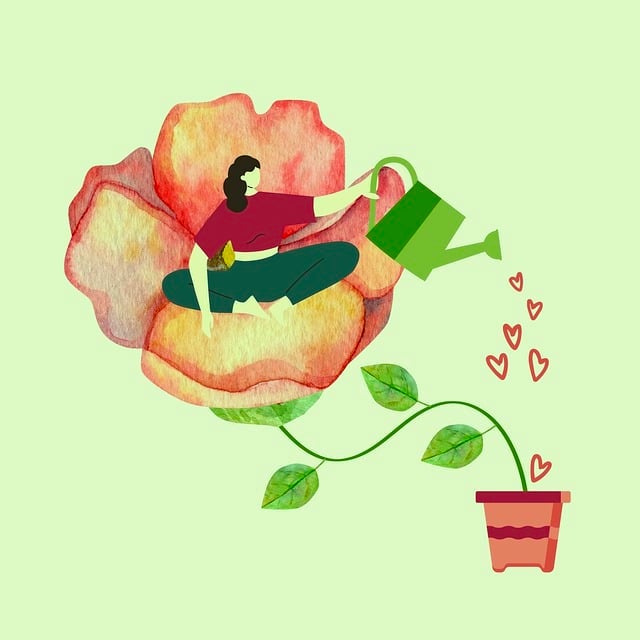
Like trees in the forest, we grow best as humans in community. Together, we re-discover our resilience and the healer within who knows just what to do.

Grateful to be in connection with you,

Julia Aziz

*The challenge of shifting from “you” to “us” is that past conditioning can have quite a stronghold, especially when old triggers persist and new patterns aren’t yet firmly rooted. That’s why making changes alongside other people is so effective. Just like you might go to a fitness class if you were trying to get in better shape physically, if you’re unlearning people pleasing, perfectionism, overdoing, and other accommodating patterns that lead to burnout, a group program like the Release & Empower Women’s Circle can support a real shift. More details on our next season can be found here.

Sign up for my mailing list if you’d like to explore similar topics together in the future.

Image by Rosy from Pixabay

When you don’t like to mess up or make mistakes

Do you worry about things you said or did and how other people may perceive you?

Do you battle niggling feelings of not being good enough? 

If you resonate with the term “perfectionist,” “people pleaser,” or “impostor syndrome,” you’re most likely a highly conscientious, caring individual with an acute sensitivity to nuance. You may also struggle with an inner tension that won’t let loose, a guard and self-critic whispering “sour nothings” that something is wrong with you. On the outside, all may look manicured and pretty. On the inside, trying to maintain control and tame creativity can be an exhausting drain of energy. 

One way to break out of the inner prison is the practice of making imperfect. You might say, who needs practice making mistakes; we do that all the time easily enough, right? But I’m talking about practicing welcoming those mistakes, embracing messiness, and loving fallibility. It goes against the grain for those who grew up finding their value in giving people what they wanted. We give lip service to fostering a “growth mindset,” but we’re not taught how to emotionally integrate failure and keep moving forward when everything goes sideways. That’s OK though; sometimes the best learning comes from stumbling through.

I’d like to share a prayer I worked with almost daily for a long time. It originated in something I read and eventually evolved into something more my own. I invite you to edit the words as needed to bring the most genuine relief and freedom to you too: 

You know who is not a perfectionist? Nature. It’s not our nature, nor is it in nature, to have everything line up just so, for all eternity. Find the most beautiful symmetrical flower you can, and there will likely be just one little tear. Some tiny “flaw” that makes it slightly different from its neighbors. Yet wow, isn’t nature filled with such fantastically intricate patterns? Take a closer look at that flower, and you’ll see the awesome beauty of her just being herself.

May you be imperfectly, beautifully whole, and gloriously you,

Julia Aziz

🌝🌜🌚🌛🌝


Sidebar on the word “prayer”

If you’re not used to praying, or if the word “prayer” brings up religious trauma or resistance, know that it doesn’t matter if you are praying 
to something or not. I think of the phrase Baruch Hashem from my own tradition, meaning “Blessed is the Name.” I like it because it captures the non-nameable aspect of divinity–I translate Baruch Hashem as “What an amazing wonder this all is, whatever you want to call whatever it is you’re calling.” How could our limited language capture the essence of interconnection and everything we can’t perceive/don’t understand as a tiny person in a vast universe? So it’s OK, we don’t need intellectual understanding of what we’re doing here. What matters is we keep expressing from the heart. We keep opening to ourselves, to each other, and to all of life as is.


Sign up for my newsletter to stay connected.