Too much to respond to, too much to take care of, trying to be responsible but exhausted and worn out… What I’m hearing from many helpers and caregivers lately is “The Depletion of Too Much.”
With this particular flavor of depletion, you might even be doing lots of good self-care (or at least some, sometimes). But what we call self-care can feel like one more thing on the to-do list. Or it can help for an hour, and then it’s back to the grind. You might feel quite used up by the end of a day and not have much motivation for the next one.
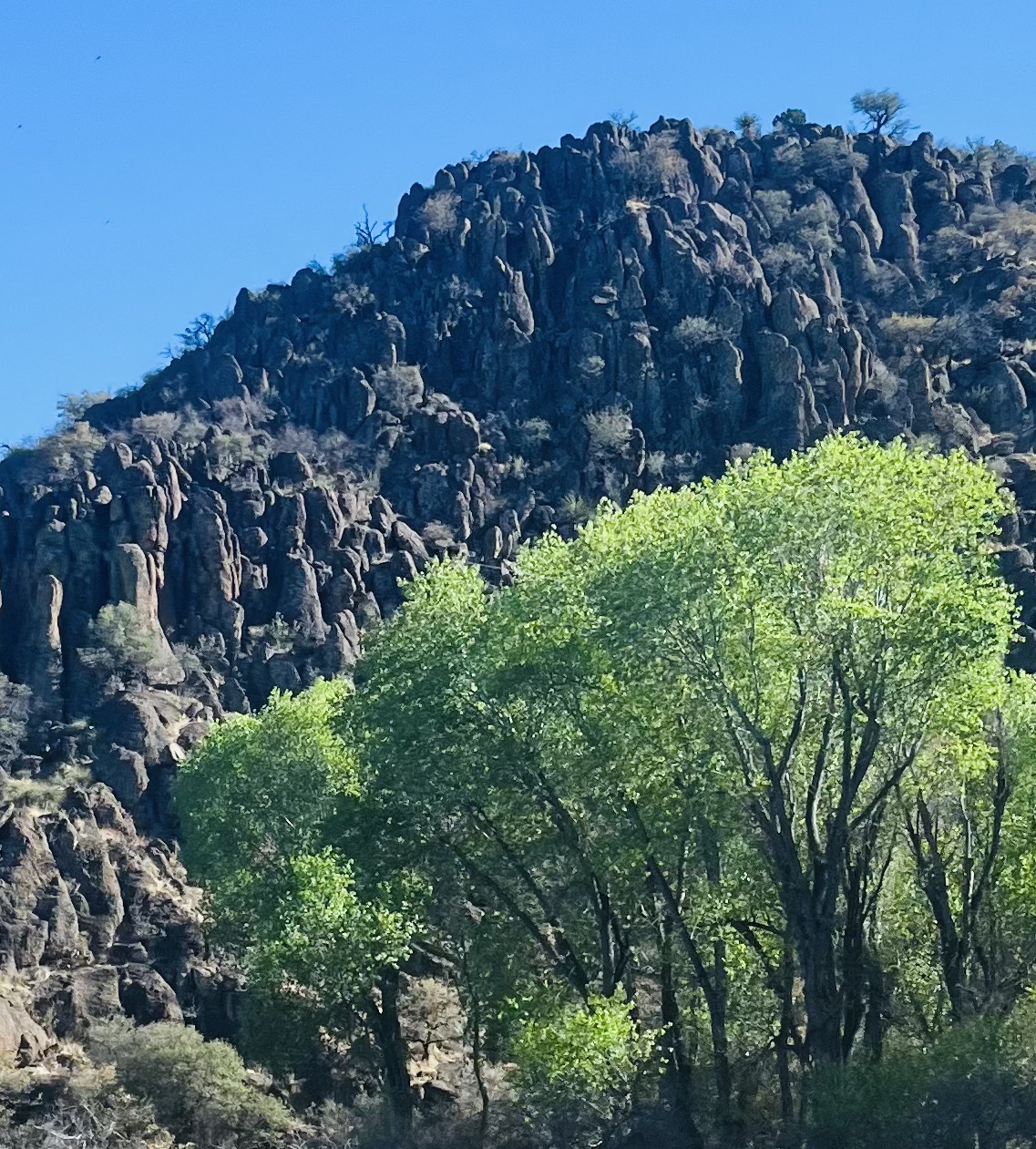
Driving a couple hundred miles across the west Texas desert recently, the dusty, desolate landscape seemed to mirror this vast depletion. And yet, every once in a while, a bright blip of green would appear. Cottonwood trees, well known for their ability to survive a harsh arid climate. The cottonwood tree’s roots can spread both wide and deep to find water beneath the ground. While getting its own needs met in this way, the tree also becomes a beacon for other living beings in search of nourishment.
I wonder if we too can find a more sustainable way to both replenish and serve?
For a human who has been doing plenty, adaptation can’t be about doing more. Seeking sustenance from where it is hidden yet abundantly available, we might instead root into the current moment experience–paradoxically receiving the relaxation, inspiration, and energy we need right here and now, in the middle of the busy.
I write these words and feel my fingers typing on the keys, while the heat of the day seeps into my skin, and the construction down the street sporadically beeps and rumbles.
Drinking in moments of being alive, no matter what those moments entail–this can be a survival skill too.
What if self-care became more self-caring? For anyone with a lot on their plate, wellness isn’t only about getting a massage or going to yoga class–though these supports are wonderful! It’s also a kindness to the struggle. A willingness to tend to the tired, rooting into what’s here and available.
Doing less, yet finding more.
May you feel your natural resilience in your very own personal way, and know how precious you are too,
Julia Aziz
PS-If you could use some support in finding compassionate, sustainable ways to navigate life, please check out my individual, group, and community services. And sign up for my mailing list! It’s a great way to stay connected, receive a reflection like this once in a while, and learn when new groups and retreats are coming up.

 Julia Aziz, LCSW-S, OIM