When certain people drive you crazy

“Everybody is annoying once you spend enough time with them; some people are just annoying much sooner,” a dear friend declared recently. This gave us a good laugh; then we shared how we could sometimes be difficult too.

It reminds me of this summer when I took a walk on a calm ocean bay at low tide. From a distance, I could see a large rock that looked like it had a gorgeous mountain landscape painted on. Once I got close though, the moss-covered boulder that was beautiful from afar turned out to be swarmed by bugs, with a terrible smell, so rough you could barely touch it. What a metaphor for relating with people sometimes!

Certain people can be harder for us than others, of course. If you’re ever replaying a challenging interaction with someone or ruminating over issues with them that may not be resolvable, here’s a question I’ve found helpful to ask:

From what distance can I see the bigger picture–and the humanity of this person?

It’s sometimes easier to feel acceptance towards a person from further away. Sometimes we need to let the emotional space between us be like the wide open sky above the sea–vast and limitless. Other times we might need to just back up a bit and take some room to process. It’s OK to be further apart for a while and get closer later, this time with better boundaries in place. It’s also OK to not know how we’ll feel in the future and just honor the space needed right now.

Detaching isn’t always the answer, though. When struggling with someone we’re trying to stay close to, there may be a different question:

Can I get in the muck with this person and grow from the experience?

We are all messy complex beings interacting with other messy complex beings. Navigating the ebb and flow of relationship, learning what we need to learn from our own and others’ imperfections– it may not be our preferred curriculum, but it’s always available in this human incarnation!

Though some relationship decisions are black and white, most aren’t. Nuance doesn’t fit neatly into a virtual square with a pretty background, so maybe that’s why it’s so needed these days. Letting go of the search for quick and definitive answers, we may have more patience to walk with the questions–and with each other.

Wishing you trust in your own discernment and the kind of unconditional friendship with yourself that embraces all parts of you, the shadow and the light, the gross and the beautiful! And some slow time in good company, because we nourish each other too. 

With respect, compassion, and care,
Julia Aziz

PS- One of the things I love about working with people is creating clean containers to explore the messiness of life. If you could use some support with being human and dealing with other humans, please check out the rest of my website for individual, group, and community offerings. And sign up for my mailing list! It’s always a good way to stay connected.

Photo by Srozan Nadzmi on Unsplash. This photo is not of the actual rocks from my beach walk! I prefer to wander without a phone, so couldn’t capture the moment đź’›

On getting triggered: Anger, guilt, blame, and the feelings we don’t want to feel

I’m curious, who showed you how to feel and process anger in a healthy way?

(Just kidding, that’s not a fair question!)

Depending on our background, we may have learned to numb or suppress negative emotions, beat ourselves up, or lash out, but it’s pretty rare for an adult reading this today to have grown up in an environment that modeled well how to work with feelings like anger, guilt, shame, or fear. It’s something we as a species are still learning. We continue to trigger negative emotions in each other all the time though–that’s just being human and living in society with other humans. Part of growing into adulthood is learning how to respect what we feel while also respecting other people’s experience, and while that may sound extremely basic, it’s often extremely missing.

You may have heard the term “shadow work” before, and it may mean something different to you than it does to me. For simplicity’s sake, I’ll define it here as finding a way to work with the thoughts, feelings, and parts of ourselves we’d prefer to banish to the basement of our consciousness. Let’s say you read, hear, or see something that gets your ire up. You begin to look for fault, but rather than inwardly or outwardly blaming (or avoiding), you pause. You say to yourself, “Hey, let’s not focus on who’s wrong right now. I’m more curious about what’s happening inside you?” Maybe you notice a little voice that’s feeling scared or lost, along with some tension in the body. And you don’t try to do anything; you just be kind about it. You offer empathy and compassion to yourself the way you would if a dear friend was sharing something similar. Giving attention to thoughts, feelings, and sensations with care in the heart, you may find yourself breathing more deeply and noticing more nuance. Maybe there is something to say or do now or maybe not. At some point, you’ll know what the next step is for you.

This is just one of many different ways we can work with triggers. Shadow work helps us to be less controlled by our conditioning and inner demons, so we can return to our truest essence. The big triggers need big patience and support. And if we’re often holding space for other people’s triggered feelings, making room for our own is doubly important.

Anger is part of a guidance system–it points us toward boundaries that need setting and power that needs rebalancing. Once we’ve moved through its fire, we can use it as fuel for change. Rather than asking who is to blame or getting stuck ruminating over what other people are doing, we might look at questions such as: How can I accept my whole self, with all my feelings and history, and take courageous action from a place of centered clarity? What is my unique role here to play in the bigger context? As social beings, we have the power to regulate and disregulate each other. In tending to ourselves and showing up again to the complexities of living in society, we make a difference. 

The quieter voices in the room, just like the quieter voices in ourselves, have some important things to say. Listening and learning, we evolve together.

In the school of life with you, in gratitude for our connection,

Julia Aziz

Sign up for my mailing list to receive reflections like this in your inbox.

PS-If you need at-home support with the kind of shadow work we’re talking about, try the simple practice outlined in this little book. It’s an affordable, accessible resource for anyone feeling challenged by negative emotions and looking for a new way.

PPS-Here’s a song by the Middle East Peace Orchestra for more support to feel.

We each have our own role to play in the emergence of a new way. May those who are struggling for their lives, traumatized, and grieving be protected, supported, and loved. May the wisdom and power of our hearts prevail.

When you’re not sure how you or other people are changing

Have you ever thought you knew someone well and later discovered a side of them you had never seen before? My brother has been transcribing some letters my grandmother wrote when she was engaged to my grandfather but living apart in New York and Chicago. Nineteen-year-old Helen Yarmush teases her beloved with tales of her dates with other men and says things like, “It’s been a beautiful day today–a day to run in the wind (which I did) and laugh and sing.” The Helen Zimmerberg I got to know three decades later was a mother of four who had already lost her first daughter to ovarian cancer and was undergoing chemo and radiation for lymphoma herself. I’ve cherished my memories of Helen’s sense of humor and ability to make the best out of most anything, and I delight in this free spirit I’m seeing now at her 20th yahrzeit (death anniversary). What a gift it is to discover something new in someone I haven’t seen for so long and to be reminded of how multi-faceted we all are.

If you feel different from who you were a couple years ago, perhaps your friends do too. Maybe you’ve lost some relationships, accepted casualties in these divisive times. What if you’ve lost yourself a bit too? In transition, most everything is incomplete and tender. You may feel in between what is no longer authentic and what is not yet grown. Are we willing to meet anew in this wobbly place, or will we try to connect the way we did before and seek only the parts of each other we used to know? I believe there is an in-between place, a place to cherish the familiar, unique essence which doesn’t alter over time while making room to see what else is emerging–in ourselves and in each other. We meet at this crossroads when we unfurl the grasp on old ideas and become willing to not understand. Like this walk through the fog at dawn, perhaps we begin by trusting the path that shows itself, finding beauty in what is not yet clear.

My grandma Helen had strong opinions, yet what was special about her was that she would change those opinions in an instant when more information came in. This wasn’t confusion or ambivalence; it was a permission she gave herself to change her mind and to make new choices as she learned better. It reminds me of something anyone who has been in a workshop, retreat, or the release and empower women’s circle with me has probably heard me say: “Let’s not hold onto anything that’s shared here. These are snapshots of present moment experiences, ones we honor but don’t carry around as your identity forever more. You’re free to show up the same or differently every time.” I’d like to offer this same invitation to anyone reading these words today. To you, who has gifted your attention here, willing to join me in the field of unknowing. Let’s let each other change and evolve, as slowly as we need to. 

With peace in the heart and health in the body,

Julia Aziz

If you’d like to connect further and hear about upcoming offerings too, just sign up for my mailing list.

How we are with each other

Sixteen years ago, I worked as a counselor for a nonprofit that was run by the consensus process. When I first started there, I was so excited. I envisioned a place where everyone’s voice was heard and counted equally, a highly evolved and cooperative utopia. The reality, however, was more challenging. Everyone’s voice was certainly heard, but often for long, drawn out meetings. Minor decisions had to be debated and postponed week after week until an agreement could be reached. As we know, opinions don’t change easily. Sharing new ideas doesn’t mean other people will be receptive to them. And if everybody’s talking, who is there to listen? 

I learned a lot from participating in the consensus process, and while I still deeply respect the model, I realized I don’t have the inner patience for it. Hearing too many opinions drains my compassion. My favorite way of being in community is more nonverbal. Some years before that nonprofit job, during a work exchange at a yoga retreat center, I had my first experience of group sharing without cross-talk. Being together in silence, owning our experiences, and sharing without the interference of others’ judgments was a relief and a revelation. Not only did we leave those meetings more centered and connected, making clear choices came easier too.  

It’s tricky, interacting with other people these days. It’s hard not to get pulled into a downward spiral of how terrible everything is and what should or shouldn’t be happening. Sure, it can be interesting to hear what you think about it all, but what I really want to know is, what is giving you strength each day? How are you keeping your heart open? In today’s world, where so little is actually known or understood, opinions feel even less compelling to me. I wonder more what changes are growing in you.

As a dear friend said to me yesterday, it’s compost time. If triggering information and opinions are going to keep coming in, all that heavy mental-emotional energy needs to be regularly let out. I’ve been hearing people say that everyone is going to need therapy when this is all over, as if mental health is something we can put on hold to deal with on some future, easier day. Mental health is not a matter of keeping it all together until the outside world improves. Let’s please not hold our breaths like that. There’s another way, one that has been around much longer than modern psychology or colonialist times. We can ritually call in, feel, and release the strong and messy feelings on purpose. When we do this letting go together in a protected and loving container, the relief is exponential. We can find both our own hearts and each other again. 

No matter what is lost, no matter what comes next, I am grateful to be moving through change with you.

With care,

Julia Aziz

PS- I’ve been studying different holistic helping modalities for many years now, and I still find profound worth in the most simple practice of being quiet together in community, listening to each other and witnessing without offering opinions. As many of you know, we do this type of sharing at the end of the Release & Empower Women’s Group Program. The experience is not passively receiving information staring at yet another screen in a webinar; it’s being together in privacy at home, actively letting stuck energies move through the mind, body, and heart without advice or judgments getting in the way. It’s designed for helping professionals, moms, and other emotional caregivers who often hold themselves together in service to others. Check it out if that sounds nourishing to you!

Note: If you’re really struggling with mental health right now and feel at the verge of a breakdown, the group program will not be sufficient nor appropriate. If you don’t know where to turn, try a 24/7 free crisis call and text hotline that can connect you with good and local support. Help is available, and I encourage you to receive it when you need it! 

PPS- To receive reflections like this one in your inbox, just sign up here.

When people feel and think differently than you

We’re having different experiences of what’s happening, and it’s causing some highly volatile emotional weather out there. Clearly we are not all in the same health/economic/job/home/legal status/mental health situation, but also we process and adapt differently. I’ve shifted in my understanding a lot recently, often after reading or talking to someone with a viewpoint I hadn’t considered. It’s a good thing, different voices. It’s also easy to get pulled into an emotional landmine you didn’t mean to step in. 

I’m seeing people volunteering to help and coming together, but I’m also seeing a lot of judgment, blaming, and shaming going on. Whether it’s a loved one who isn’t being as sensitive as they could or a “look on the bright side” post that hits a nerve, it’s a triggering environment. So what do we do with all this activation?

Well, first off, we know it’s often best to step away and not communicate with anyone for a bit. I am mom to three children, so trust me, I know that kind of hermitage is not always possible! Taking recovery time before responding is key though. So is remembering that while we may be triggered, it doesn’t mean someone is to blame. If we feel riled up, it is our responsibility to feel, soothe, and care for ourselves in this vulnerability. It is not within our wheelhouse to change anyone else’s mind or fix the way others feel.

If self-soothing isn’t your MO and you often harshly judge yourself, I recommend placing a hand on your heart and trying out some of these phrases when you feel the trigger coming on:

I love you, and I know you’re doing the best you can. 

I am here for you every step of the way. 

I know this has been really hard for you, and I am so proud of you. 

This is a humbling time. None of us have all the answers. Good news is: none of us ever did! Giving up the attempt to control, surrendering to “I don’t know,” making space for all the feelings to be felt, allowing others that space as well—this is what we can do for ourselves and for each other emotionally. 

It’s OK if you’re scared right now. It’s OK if you’re thriving and empowered. It’s OK if you’re furious. It’s OK if you’re despairing. It’s OK to have all these emotions and more in the span of one hour. There is plenty of space for feelings to be owned, felt, and transformed.

I wish you so much gentleness from your own heart. The more you take care of your own well-being, the better all our interactions are. We can do this, together. 

xoxo
Julia Aziz

PS–If you’d like further support, please sign up for my newsletter or check out my services here.

Taking the Blame vs Taking Responsibility

Are you pretty hard on yourself? In my experience, when something goes awry, some tend towards blaming external circumstances and other people, while others almost always point the finger inwards. If you are one of the latter, you may have been taking the blame for long enough, and perhaps it’s time to take responsibility instead.

Here’s the difference, as I see it:

Let’s suppose there is a conflict, a misunderstanding, or some kind of big interpersonal mess. When we take the blame, we are saying, “Oh no, I’ve done something wrong. It’s all my fault. I messed up, of course I did.” That litany can go on and on, all with the purpose of self-flagellation. The result? Feeling crappy about yourself and stockpiling reasons why you’re not a good person. 

Now take this same conflict, and instead of taking the blame, take responsibility for your part (and your part only). This looks more like, “Oh wow. I missed the mark there, and I am going to look at this further so I can make amends, starting from where we are now.” When you take responsibility, you acknowledge where you made a mistake, and you don’t beat yourself up because you know you are human, we all make mistakes, and you want to do better next time. It’s the difference between using what happens in life to prove you’re unworthy and using what happens in life to learn and move forward. The only way to make that shift, in my experience, is to develop a true friendship with yourself. One where you look in the mirror and say, “Hey, I really like hanging out with you all the time. You understand me even when no one else does.” 

That’s also part of the difference between taking the blame and taking responsibility. It is very possible that you did something that hurt someone else, and you didn’t mean to hurt anyone at all. Both can be true—someone else is hurt AND your heart was in the right place. With clear communication and a wider perspective, we can see where we went off course and take correction for next time. We can ask forgiveness and know we are worthy of it, even if we don’t receive it from anyone but ourselves. And if someone is angry at you for more than what you actually did, maybe you don’t have to take the blame, and you can still have compassion for what they’ve been through. 

As I’m getting to know the amazing women in the release and empower groups, the question on my heart is “What happens when nice girls find their strength?” I’m not at all an advocate of becoming cold or uncaring. Considering other people’s feelings is essential to the entire world’s well-being. But many of us will break out of our shells and have SO much more to offer when we care a little less about what other people think. When you love yourself, you can clean up the messes you make instead of collapsing in them. You can hold others accountable for their parts without blaming either one of you. You can be a true friend to yourself no matter what happens next.

I hope this message speaks to you in some way that is helpful. If it doesn’t, I hope you send it straight to the trash without a second glance. Maybe this message wasn’t meant for you; maybe someone else needed to hear it instead. You get to decide what you allow in. I honor your truth, and I sincerely thank you for honoring mine.

May your heart overflow with compassion for yourself, and for everyone else in this crazy human existence,

Julia Aziz

Receive reflections like this in your inbox now and then, along with a free gift of a few simple practices to help you through your days.

When you’re misunderstood

I shared in the women’s group this week about being misunderstood, how it hurts the heart but is also none of my business. If someone sees me differently than I am, I have to remember there is a character I play in their story. That character may look just like me, but I don’t know her that well. She doesn’t have much to do with the main character I play in my own narrative, the one who makes lots of mistakes but usually has pretty good intentions. It’s super important to me to clear misunderstandings with other people, but not everyone shares that value or wants to meet in that place of mutuality, the one Rumi describes as the “field beyond ideas of wrongdoing and rightdoing.” Sometimes, I have to accept that I will play the enemy in someone else’s story, no matter how hard I try to make things right. Still, I don’t have to hold a grudge just because someone holds one against me. 

We are now moving through the Days of Awe, also known as the Days of Repentance, a ten day period in the Jewish tradition of taking accountability for one’s self and asking forgiveness where we know we’ve misstepped. I love that there is community time set aside for this practice, as I can tell you especially from my work with grief and dying, that it really matters. No one likes to leave here with important things left unsaid and undone. But just because we try to make amends doesn’t mean we will be received with open arms. That’s when self-forgiveness and boundaries become so important. 

Boundaries mean we get to choose the state of our innermost being. You can offer love, but whether or not it is received isn’t your responsibility. Your greatest responsibility is to that quiet place inside your own heart. And so, even in this period of accountability, all relationships will not be healed. The messes may still be kind of messy. All we can do is clean up our own side and make sure we put out the welcome mat. 

Sometimes I make little cards out of my daughter’s old preschool paintings. Today I pulled this one:

I thank the friend who first said this to me, and I wish this self-acceptance for all of you as well. If you are coming from the heart and doing the best you can, it is most certainly enough. You have the power to forgive and to start over. No one can take that from you.

Wishing you strong and healthy relationships, especially the one you have with yourself,

Julia Aziz

PS–If you’re going through some challenging times with self-forgiveness and letting go, here are some October offerings to support you in your own growth and healing:

  • Counseling: currently a couple openings, in-person and remote options available, schedule a free inquiry call here. 
  • Changing Along With Change: Hypnotherapy for Life Transitions, a Restoring Balance Luncheon at Seton Cove on Tuesday, October 22nd
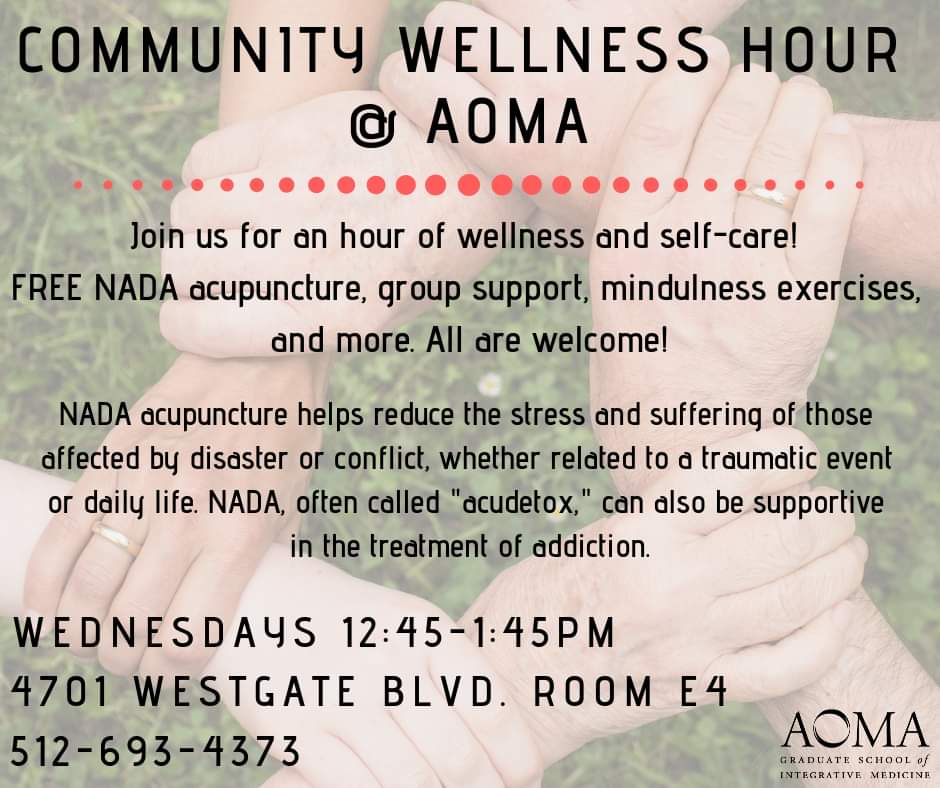
  • Community Wellness Hour at AOMA Graduate School of Integrative Medicine every Wednesday 
  • The Women’s Release & Empower Group is currently full and closed for the fall, but a new group will be starting in late January. Check my website for more details. 

When you have mixed feelings

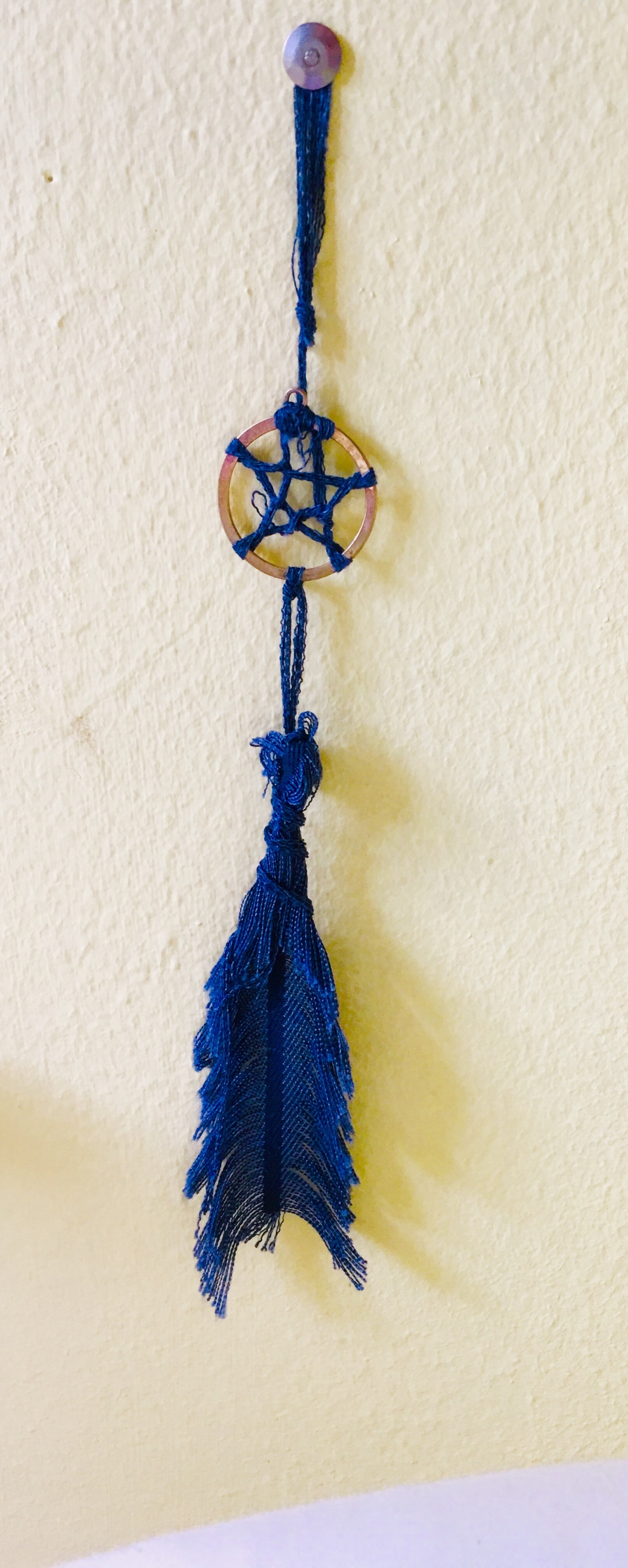
A handful of years ago, I found myself waiting on a bench at a bus stop in MA, when a weathered, maybe young, maybe middle-aged man sat down next to me. We soon struck up a conversation, as I was curious about the assortment of craft materials he was pulling out of his bag. He proceeded to tell me a considerably involved story about how his ex-wife had kicked him out of the house and out of his daughter’s life, and how he had been homeless and couch surfing on-and-off for some time. In the course of these nomadic years, he had discovered how to create dreamcatchers from materials he gathered on the streets. He used thread unraveled from an old pair of jeans, washers dug out of the trash, and bits of feathers and bling found along the road. I had always wanted to make my own dreamcatcher, and as he talked, he also began to teach me. He generously shared his materials and assisted me in creating this simple design:

When it was time for us to go our separate ways, we said goodbye with a hug. I was thankful for the gift, and he was grateful for the listening. He smelled strongly of the streets, and I could intuit from his story that he had not treated his loved ones well in the past. This was not a person I would invite further into my life. And yet, I will never forget him or his patient teaching. I won’t forget his resourcefulness, how he made beauty out of what the rest of us throw away, how he learned from and connected to an indigenous tradition that goes back countless generations. The dreamcatcher we made together still hangs next to my bed and catches my dreams years later. 

Here’s the other side of the story: he wasn’t yet able to take responsibility for the pain he had caused. He still blamed other people for his own destructive behavior. From what I could gather, there was good reason for his ex-wife to not tolerate contact by him. Was this a bad person who could do some art? Was this an artist who had done bad things? My answer is this: we are all everything. We contain all the shadow and all the light there can possibly be. Instead of judging ourselves or others, can we receive and appreciate the true gifts while also establishing clear boundaries where we need them? Can we invite the compassionate heart that also knows how to say no? 

Humans are messy and paradoxical. Each one has a jewel inside, rare and beautiful. Each one casts a shadow, dark and sometimes hurtful. Love means committing to seeing the light, and it means stepping away when we need to. Finding the proper distance from which we can feel compassion is a delicate dance. But one worth every song.

If you’re having trouble negotiating closeness and distance in relationships with other complex human beings, you are not alone. Support is available here, not to tell you what to do but to redirect you towards your own intuition and wisdom on these matters. Maybe you’ll even find the answers you need on the streets or in a dream. If you ask for help, it is sure to arrive somehow.

With love,

Julia Aziz

Sign up for reflections like this in your inbox.

Why I think Valentine’s Day is best celebrated in elementary school

It’s my middle child’s last year of elementary school, and I have been watching him write valentines for all his classmates. It’s a bittersweet time for me, knowing that Valentine’s Day will never be the same again for him. Soon enough, valentines will be for lovers, and he will know the same idol of romantic love that his culture bows down to. If he is lucky in friendship, he may exchange loving messages with friends or family too. But the form of human love overlooked on Valentine’s Day is one that we could all use more of, and it is the spirit behind elementary school valentine exchanges. 

Community love. 

Community love is appreciating the people we are on this crazy earth ship with, whether or not each individual is our favorite person to be around. It’s the kind mail carrier who always says hello and the neighbor across the street who posts constantly on NextDoor. In elementary school, you make a valentine for everyone, whether or not you know them well or enjoy their presence. Some kids grumble about having to make them, most bring store-bought candy, and the majority ignore hand-written notes. It can also be a hard time for the kids being bullied, shunned, or overlooked. Community love is messy like all other forms of human love. But there is an opportunity here, a teachable moment for us all. The spirit behind the practice is to look for something you can appreciate about the people around you. Even if it’s that they are making you stronger and more resilient by being your adversary. It’s about gratitude for the whole, even if all the parts are imperfect on their own.

Community problems need community healing. We are each responsible for our own well-being, but we can only go so far alone. When we come together to support ourselves in community with each other, the power of our individual work grows exponentially. 

If you feel a bit disconnected from community love, I am happy to share one of my communities with you. Community Wellness Hour is *free*, and it is an ever-evolving group of people who take time out of their lives to slow down, center, and relax each week. We come from all kinds of backgrounds, but we all come for peace. 

Community Wellness Hour is drop-in, but regulars rotate in and out. When you first arrive, you’ll sit down and receive ear acupuncture called the NADA protocol. This protocol is commonly used for addiction as well as general stress recovery. If you aren’t comfortable with needles, we have some cute little beads to wear for acupressure. We sit in silence for the first half hour, meditating or letting the mind go wherever it needs. Then we all go on a little imaginary journey together through a guided meditation. We end with a brief sharing circle, which is all the more authentic because of the quiet we just shared.

I don’t remember everyone’s name. I even forget faces, which I am trying to do better at. But I do feel the love in the room each and every time. It’s different than romantic, family, or friendship love. It’s just humanity, sitting together, doing the best we can. I am grateful for all of it.

Community Wellness Hour


Whether you join us one day or not, I hope you feel the love of your community today. You are not alone here. We are here.

Julia Aziz

Sign up for my mailing list to hear about other community offerings as they come up.

The Mirror

Yesterday morning, I saw an older woman crying on the trail. I put a hand over my heart as we passed, and we looked into each other’s eyes, just briefly. I saw her, and she acknowledged that seeing. My chest filled, and tears came to my eyes. I have been that woman crying on the trail. It’s not so easy to be seen when you’re in pain.

This is a healing time for many. In my experience doing my own healing work and holding space for others, the difference between re-wounding and healing is in the safe, loving container. To be in a place where you can feel it all–the shock, the panic, the rage, the terror, the helplessness, the numbness–to feel into the darkness, but present in the body, supported by a deeply compassionate container that sees and honors your true essence–that is healing work. There are many resources available, and if you’re having trouble finding some, please ask for help. If you’re going solo on this leg of the journey, I hope you are creating that space for yourself and finding those resources within.

I see this as a real time for self-reflection. We each are coming from different realities, so we have different questions to ask ourselves. Here are some of mine:

42917423_10215815937822808_89046294227582976_nWhere have I blamed myself for situations that were out of my control so I wouldn’t have to feel vulnerable?

Where have I felt a boundary be crossed without saying anything?

Where have I misused power myself?

How can I contribute more to our collective healing?

Self-awareness is a key not often used. It opens the door to vulnerable conversation. It allows me to see you, instead of just seeing a reflection of myself.

Whoever you are, whatever you’re going through, I hope you face and embrace the person you see in the mirror. That you ask the hard questions and say to yourself, “I am with you every step of the way.”

May we come into our true alignment with healing and integrity.

With love,

Julia Aziz

Sign up for my mailing list so we can stay connected.