On helping others through troubled times that affect you too

There’s a question I’m hearing a lot, and it’s not a new one. If you’ve been emotionally supporting other people in some way, this question has been relentless in recent years:

How am I supposed to help people through a collective crisis that I am dealing with myself?

As a therapist, group facilitator, and mother of three, I know many parents, mental health practitioners, healthcare and wellness providers, caregivers, teachers, and managers who are processing double-time. I’m not going to try to answer this question; there’s already plenty of advice coming at you. These are just some thoughts for contemplation.

  • It is not our job to know better, be better, draw a silver lining around a dark cloud, or fix things just because we are in some sort of helping or leadership role. Like everyone else alive today, we’ve also never lived through this particular time in history. Lessening the pressure we put on ourselves gives room to breathe–and think more clearly.
  • It is absolutely our job to truly tend to our ourselves so we can maintain the capacity to show up for others. That may look like receiving more support, but it’s not only about care from the outside. It’s also things like how kindly we talk to ourselves. How we say no and rest. How we let our bodies express the fear or dread or rage or grief, so we don’t have to suppress or project feelings in order to keep going. 
  • Showing up with an open, listening heart in deep curiosity about the individual experience of the people we are serving matters. Collective crises do not affect all of us in the same way. Holding a space open for someone (or a group of someones) to work through their own unique experience is a real service. Especially in a time when their other loved ones may not be emotionally available.

I know many kind caregivers feeling like they have to pretend to have hope or optimism when the truth is, they are feeling the dark night. Could it be okay to orient towards “being with” rather than “doing for” others right now? I look to the trees, the river, the animals, the moon, the ancestors. I know even when we don’t want to be where we are in the cycle, we are here. 

If you need a break from people, I hope you can take one. If that’s not possible, I hope you find a refuge for your own feelings, and know that whatever you can give is enough.

With care and courage,

Julia Aziz

SUPPORTS FOR THE HELPERS

–A reminder about this Clearly Clinical podcast interview for professionals struggling with their own heavy times while still helping others

–If you could use a place to be yourself amongst other helpers, and you identify as a woman, save a spot in the next season of Release & Empower: A Group Program for Women Moving Through Change. In troubled times, it feels like such a nourishing, fortifying gift to be with women feeling, releasing, and re-centering side-by-side in nonverbal and expressive ways.

–If you’re a mental health professional wanting more clinical and professional development support, you can set up an individual consultation session or join my consultation group.

Sign up for my mailing list and some simple self-support practices here.
When you’re trying to let go

I’m happy to say I’ve been meeting new friends on my morning walks again. Just last month, I had encounters with a porcupine, owls, armadillos, hawks, foxes, a crested caracara, and coyote. I always try to play it cool, gently slowing down without making too big a deal of it, wanting to greet the animals in a natural way. As you might imagine, they don’t often hang out for more than a few moments, and I find myself feeling wistful each time they leave. Not knowing when or if we might meet again, I’m left with a fleeting joy, better nourished by the connection.

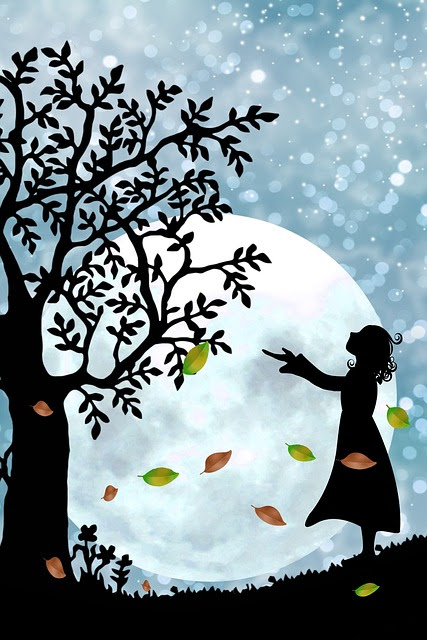
If you’ve been involved in spiritual, self-help, or personal growth circles, you’ve been hearing the phrase “let go” anywhere you look and listen. Lately, I’ve been curious about what I’m calling “letting leave,” a concept best taught by our wise companions and caregivers, the trees, in this new fall season. Letting leave is a less active, more receptive process than letting go, one that honors a timeline beyond human will. The leaves of a tree are not hustling and on the go; rather, when their time comes, they simply fall to the earth. A gust of wind or a big storm may also blow through and accelerate the process of leaving. Life is like this too, isn’t it? Smooth or sudden, ready or not, when change wants to happen, it will. 

In the healing arts, we often begin with what we want to let go of. What’s wrong, what’s the presenting concern, what are you struggling with? A problem focus is helpful in knowing what needs attention, but concentrating too much on the issue can sometimes hinder its release. As I see it, one of the key aspects to actually receiving help and letting support in is being able to let suffering leave. On the surface, we all want that. But when you’ve been struggling with something for a long time, be it physical, emotional, mental or spiritual, the question of “Who am I if I’m not a person with this pain?” feels almost incomprehensible. There’s no easy bypass here; instead, we might keep asking the question. At a deep level of consciousness, we “let leave” the attachment to knowing what we are or how change will occur.


The letting leave process doesn’t often happen in one fell swoop; everything has its season, and seasons come and go too. It can become a bit easier to trust the natural cycles when we notice the subtle shifts happening all the time. Have you ever found yourself telling a familiar painful story, and realized it’s not actually true or still happening in this moment? Healing may be the recurrent “in the now” experience of letting the resistance to what’s hard leave. It is also, as the Buddhists know well, the loosening of our clinging to what feels good. I watch those trees rooted down into the soil, and see how they allow more powerful forces to weather and therefore strengthen them. We have this capacity too, when we are grounded and willing to hold lightly what we think we have to do.

The invitation I’m hearing this fall is to soften and find courage in letting what needs to go leave when it’s ready, whether that’s old patterns, beliefs, or something more tangible. There will be grief, and sudden loss especially will need plenty of time and love to integrate. In holding sacred the leaving times, may we also find deep appreciation for all that is here with us now.

Until next time, thank you for reading,

Julia Aziz

Click here to receive musings in your inbox every now and then

I was able to catch a photo of this cutie pie, thought you might appreciate 🙂

Wisdom From Those That Came Before Us

I don’t know who wants to hear this right now, but I hope you will share this with anyone who needs it. I promise you, there are people you love out there right now who are scared, and they don’t feel like they can talk to anyone about what they are truly afraid of. You probably also have loved ones in high risk groups who are not afraid and who are ready to talk, but they may be quite lonely because no one will listen. 

As many of you know, I used to work as a hospice chaplain, visiting people in their final months, weeks, days, and hours, as well as sitting and praying at the deathbed after a loved one’s passing. I’ve had terrifying experiences as well as profoundly blissful ones, but every single encounter with death has been humbling. There were times I felt the pull of dark energies nearby and times I was floating in bottomless peace. Yet one of the most important insights that came from those families I had the honor to witness and care about was this: much of the fear of death is really a fear of grief. 

Where there is love, there is loss. Where there is loss, there is love. This is what it means to be a human being. This is what we signed up for. There is no need to wait until you or your loved one or the whole world is in crisis. Healing can happen now. Maybe not curing, but real healing. We can forgive ourselves, we can reach out and protect each other, we can draw boundaries and forge a new way, for as long or as short a time as we have left. 

I’d like to share with you again a Hebrew song from Kol Nidre, a holy of holy nights where all the individuals in the community together release unmet expectations, forgive broken promises, and start over completely. It has just two lines:

Kol ha-olam kulo gesher tzar m’od 
V’ha-ikkar lo l’faheid k’lal


The first line translates as:

“The whole world is a very narrow bridge.” 

We are being slapped in the face with this reality right now. The entire world is a very narrow bridge. Everything can and will be taken away from us. Eventually, what we have left is the spirit of who we really are—the pure essence only–and absolutely nothing else. This is nature. This is the existence we know. 

We can’t stop at just the awareness of the narrow bridge though! Stopping here has caused, at least in my lineage, chronic anxiety, worry, and fear for generations, a collective PTSD from a long history of sudden loss. No, we must absolutely remember the second half:

“The essential thing is not to fear at all.”

Courage. 

Feeling all the feelings, even and especially the grief and the fear.

Letting those feelings pass and moving forward.

Knowing necessity to be the mother of invention and finding creative solutions.

Taking the next right step in the direction of wellness and peace.

Changing alongside with change.

So yes, nothing feels secure. But what if we could dance across that narrow bridge anyway? I’ll do a little hip shimmy, maybe you’ll do the cha-cha. Both of us with our eyes wide open, balancing on one foot, then the next.

Fear, I see you! Fear, I hear you! Thank you. You remind me: I am choosing Love.

Always,
Julia Aziz

PS-I’ve been feeling called to write more in these times of isolation, so please do share this sign-up link with friends and family who may need some alternative messages coming into their inbox.  

PPS- I also write about this song in my early motherhood memoir of anxiety and personal growth, if you’re looking for reading material. 

When things get real

PhD’s are doing research on vulnerability. Does that not strike anyone as sort of strange? Have we all been hiding so well that we need scientific studies to prove it’s better to be real? I’m not suggesting everyone walk around talking about their troubles all the time. It’s nice to ask if people are available before we unload. But being vulnerable is also about letting go of pretenses in general, not participating when something doesn’t feel right, and asking honest questions. 

Part of what I loved so much about hospice work was there was no room for posturing. No one can pretend to have all the answers about death. People are real at the end, both the ones leaving and the ones staying behind. Masks come off, and anything that has been avoided rises to the surface, urgently asking for resolution. 

Sometimes big life changes are what shake us into authenticity. The breakup of a significant relationship, quitting an addiction, watching a loved one die, getting a scary diagnosis, or even leaving a job can set the soul into a dark night. These little deaths are opportunities to be real with the most important person in your life: yourself. The darkness is a ripe place for inquiries of the heart and soul.

What do you truly care about? 

What do you need to let go of? 

If you were looking back from your final days, what story would your life tell? 

What story do you want it to tell? 

If you’re at a crossroads right now, and it’s throwing almost everything into question for you, it may be a good time to be asking those questions. Gently, though. If you push a butterfly out of its cocoon too early, it will die. Sometimes we need the darkness for incubation. We may not get answers to our deepest questions right away, but we can be real about where we’re starting from. It’s a great place to be reborn.

Wishing us all the courage to be just who we are, and plenty of love and forgiveness in the process,

Julia Aziz

PS–If you’re looking for ways to face the hard questions and be with the discomfort of change, some of the tools I work with in session are things you can practice on your own too. Some clients come for weekly psychotherapy and others come on and off as needed. It depends on the level of support you’re needing, and that’s totally up to you. Find all the details here. And if you’re not feeling called to counseling at this time, but you’d like a little more inspiration to get real with yourself, sign up for my mailing list here.