When certain people drive you crazy

“Everybody is annoying once you spend enough time with them; some people are just annoying much sooner,” a dear friend declared recently. This gave us a good laugh; then we shared how we could sometimes be difficult too.

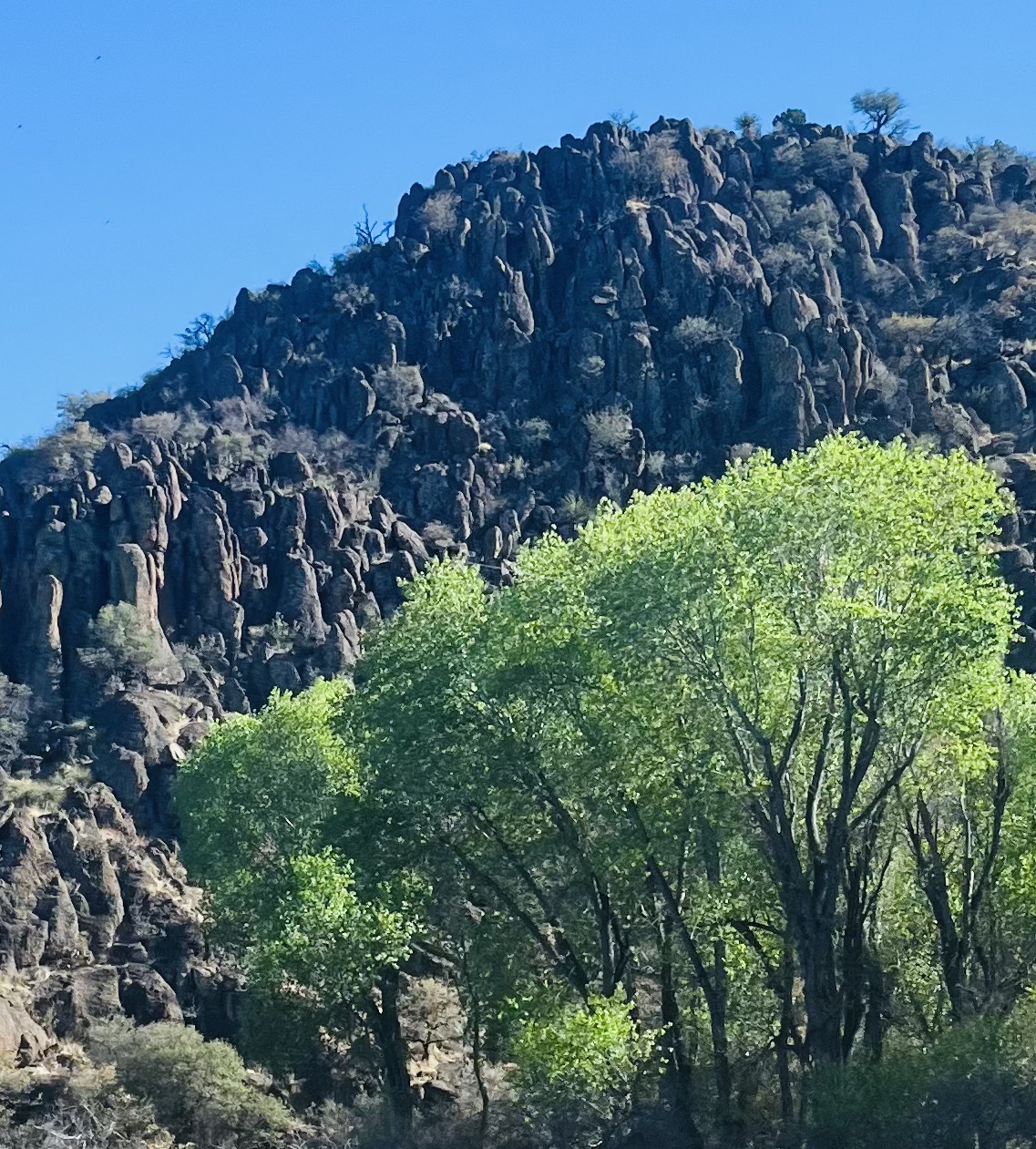
It reminds me of this summer when I took a walk on a calm ocean bay at low tide. From a distance, I could see a large rock that looked like it had a gorgeous mountain landscape painted on. Once I got close though, the moss-covered boulder that was beautiful from afar turned out to be swarmed by bugs, with a terrible smell, so rough you could barely touch it. What a metaphor for relating with people sometimes!

Certain people can be harder for us than others, of course. If you’re ever replaying a challenging interaction with someone or ruminating over issues with them that may not be resolvable, here’s a question I’ve found helpful to ask:

From what distance can I see the bigger picture–and the humanity of this person?

It’s sometimes easier to feel acceptance towards a person from further away. Sometimes we need to let the emotional space between us be like the wide open sky above the sea–vast and limitless. Other times we might need to just back up a bit and take some room to process. It’s OK to be further apart for a while and get closer later, this time with better boundaries in place. It’s also OK to not know how we’ll feel in the future and just honor the space needed right now.

Detaching isn’t always the answer, though. When struggling with someone we’re trying to stay close to, there may be a different question:

Can I get in the muck with this person and grow from the experience?

We are all messy complex beings interacting with other messy complex beings. Navigating the ebb and flow of relationship, learning what we need to learn from our own and others’ imperfections– it may not be our preferred curriculum, but it’s always available in this human incarnation!

Though some relationship decisions are black and white, most aren’t. Nuance doesn’t fit neatly into a virtual square with a pretty background, so maybe that’s why it’s so needed these days. Letting go of the search for quick and definitive answers, we may have more patience to walk with the questions–and with each other.

Wishing you trust in your own discernment and the kind of unconditional friendship with yourself that embraces all parts of you, the shadow and the light, the gross and the beautiful! And some slow time in good company, because we nourish each other too. 

With respect, compassion, and care,
Julia Aziz

PS- One of the things I love about working with people is creating clean containers to explore the messiness of life. If you could use some support with being human and dealing with other humans, please check out the rest of my website for individual, group, and community offerings. And sign up for my mailing list! It’s always a good way to stay connected.

Photo by Srozan Nadzmi on Unsplash. This photo is not of the actual rocks from my beach walk! I prefer to wander without a phone, so couldn’t capture the moment đź’›

When you’re feeling worried

Do you ever feel like your concerns are repeating on an endless loop? “What if… but then, what if…?” To deal with the noise, you might be controlling everything you can, googling down rabbit holes, or seeking distraction. No matter how you cope, it’s hard to think clearly with a worried mind.

In contemplating worry, I like to remember a morning walk I took in northern California last fall. My mind was full from a recent family crisis, and ruminating thoughts were completely distracting me from the surrounding beauty. Then I noticed a small opening inside a big redwood tree. Curious, I squeezed through and found myself in complete darkness. I felt my way around the space and sat down until the noise in my head began to settle.

“Don’t rush to a solution. Sit here and rest,” counseled the tree.

So I did. 

The troubles plaguing my mind didn’t get resolved, but slowly, their urgency lessened. As my eyes adjusted to the darkness, I began to see shapes–and options I hadn’t been aware of before. When I reemerged from the tree hollow, I felt like myself again, mind and body back to earth.

Worry likes to say:

“Don’t let your guard down. The other shoe is about to drop. Figure it out now–there’s not enough time.”

Quiet says:

“Oh sweetie, you’ve found your way through chaos before. It’s OK to slow down. Wait until you can see your next step.”

Only we can decide which voice to listen to. 

What if fear was a doorway to trust? Despite its compelling nature, worry is not a protection from bad things happening nor does it help us think clearly or creatively. What helps in long-term crisis and uncertain change is caring, thoughtful humans offering of themselves in the particular ways they are called to contribute. More pressure won’t help; solid ground can.

As our long story continues, may we find refuge through the fear, re-rooting ourselves for inspired action. And in our darkest of hours, may the quiet voice of compassion be a true companion and guide.

Sending love,
Julia Aziz

Sign up for my mailing list to receive a few simple tools for self-compassion and well-being.

On helping others through troubled times that affect you too

There’s a question I’m hearing a lot, and it’s not a new one. If you’ve been emotionally supporting other people in some way, this question has been relentless in recent years:

How am I supposed to help people through a collective crisis that I am dealing with myself?

As a therapist, group facilitator, and mother of three, I know many parents, mental health practitioners, healthcare and wellness providers, caregivers, teachers, and managers who are processing double-time. I’m not going to try to answer this question; there’s already plenty of advice coming at you. These are just some thoughts for contemplation.

  • It is not our job to know better, be better, draw a silver lining around a dark cloud, or fix things just because we are in some sort of helping or leadership role. Like everyone else alive today, we’ve also never lived through this particular time in history. Lessening the pressure we put on ourselves gives room to breathe–and think more clearly.
  • It is absolutely our job to truly tend to our ourselves so we can maintain the capacity to show up for others. That may look like receiving more support, but it’s not only about care from the outside. It’s also things like how kindly we talk to ourselves. How we say no and rest. How we let our bodies express the fear or dread or rage or grief, so we don’t have to suppress or project feelings in order to keep going. 
  • Showing up with an open, listening heart in deep curiosity about the individual experience of the people we are serving matters. Collective crises do not affect all of us in the same way. Holding a space open for someone (or a group of someones) to work through their own unique experience is a real service. Especially in a time when their other loved ones may not be emotionally available.

I know many kind caregivers feeling like they have to pretend to have hope or optimism when the truth is, they are feeling the dark night. Could it be okay to orient towards “being with” rather than “doing for” others right now? I look to the trees, the river, the animals, the moon, the ancestors. I know even when we don’t want to be where we are in the cycle, we are here. 

If you need a break from people, I hope you can take one. If that’s not possible, I hope you find a refuge for your own feelings, and know that whatever you can give is enough.

With care and courage,

Julia Aziz

SUPPORTS FOR THE HELPERS

–A reminder about this Clearly Clinical podcast interview for professionals struggling with their own heavy times while still helping others. 

–If you could use a place to be yourself amongst other helpers, and you identify as a woman, save a spot in the next season of Release & Empower: A Group Program for Women Moving Through Change. In troubled times, it feels like such a nourishing, fortifying gift to be with women feeling, releasing, and re-centering side-by-side in nonverbal and expressive ways.

–If you’re a mental health professional wanting more clinical and professional development support, you can set up an individual consultation session or join my consultation group.

Sign up for my mailing list and some simple self-support practices here.

When you’re asking “Why is this happening?”

I was walking along a forest trail a few months ago when a scrambling sound came from high up above. Then suddenly a turtle came rolling down the hillside, landing shell-side-up in front of my feet! Many of you know how much I love a good nature metaphor, but I’ve been contemplating this falling turtle for a while, and I haven’t been able to make much sense of it. (Don’t worry about the turtle though, he was stunned but OK!)

One of the most common questions I hear is “Why?” Why do I feel this way? Why is so-and-so behaving like this? Why is this issue coming up again when I thought I already dealt with it? A lot of people come to therapy with these kinds of why questions. It’s often a genuine wish for understanding, a hope that by seeking answers, clarity and resolution will arrive. Yet all sorts of dynamics are at play in any given situation. Our human perspective isn’t wide or nuanced enough; we can only analyze so far until we’re going in circles. Living on this earth planet in this vast galaxy, there’s a lot more to life than we can possibly get a grip on.

When I was a young person entering the professional fields of mental health and spirituality, I was seeking answers to many “why’s”. Now when I catch myself asking “why,” I turn towards the “how”. How do I live this? Sometimes that “how” might include deep somatic or expressive processing; sometimes it might involve simply accepting what is and turning towards the next small step. Without answers to seek, we can take our time, slowly living our way through.

Turtle

When we dig deeper, sometimes what’s hard isn’t so much the lack of understanding, but the wish for the past, or the present, to be different. Maybe we’re looking for someone or something to blame–or maybe we feel guilty and ashamed because we blame ourselves. You know what I say to that? F-it. Don’t let the spiritual bully get you. Stumble, fall down, sit still, keep going, whatever you need to do. Like that adventurous turtle that didn’t know what was coming, we adapt as we go. While we may not arrive at complete answers, we’ll have a new story to tell.

Wishing you some ease and kindness towards yourself,

Julia Aziz

Want to hear about upcoming offerings and receive these reflections in your inbox? Sign up for my mailing list and receive three simple practices to make living with yourself a bit easier đź’ž

Photo by Bogdan Costin on Unsplash. Photo is of a different turtle than the one I saw hurtle down the hill, but I can assure you, my turtle friend survived and went on his merry way.

When what you want is not happening

You may have heard my bear stories before, but I’ve recently been thinking about one I met this summer in the Appalachian mountains. I had begun my morning walk a little later than usual, and as I reached the top of the road, a young black bear crossed my path. She stopped and looked at me, as I stopped and looked at her. Deciding I was not a bother, she kept walking and even let me follow not far behind for a while. I could wax on about her grace and the deep gratitude I felt in seeing her, but that’s not what this story is about. What struck me was that had I not been delayed in getting out that morning, I would have missed her entirely.

Timing is a funny thing, and not all unexpected happenings are welcome. Despite knowing we are just tiny beings with limited life spans on a spinning planet in a vast galaxy, we get pulled into the collective societal consciousness that assumes we can take charge here. The conditioning of western culture makes us believe we should decide what we want and make it happen, otherwise we’re doing something wrong. So of course when things don’t go our way, we blame ourselves–or other people. Some of us respond by pushing our agenda harder; others fall into indecision and inertia. Either way, we lose the sense of being in the flow, in right timing. So what other options are there when life seems to be saying “no” or “not now”?

Rather than pretending to be ok, what if we let our reactions run their course? As in, “Hey sweetie, you’re allowed to be frustrated, disappointed, and even resentful. It’s OK to feel how you feel. Take your time, and let the waves come and go.”

What if we get curious about the obstacles that have shown up, asking, “What is there to learn here, and what more support might I need?”

Or maybe this is a resting time, not a doing time, and things just need a chance to work themselves out. What if we let go of trying to figure it all out?

In releasing what “should have been” and turning in a new direction, something else might even show up around the corner.

It takes a different kind of strength to slow down, accept what’s not happening, and look for the gifts that do show up. Underneath the conditioning, we are, like all sentient beings, wild and resilient, designed to adapt to change. We can unlearn some of the ways we’ve been enculturated and remember the innate call to harmonize with life and its timing. The old paradigm fights to maintain dominance and control, but there are more of us who want peace than not; we can start on the inside, wherever we’re at. 

May you feel more and more like your authentic self
Living a life full of curious synchronicities
Following the path as it reveals itself.

Walking with you,

Julia Aziz

*As soon as I took out my phone to take the picture of the bear, she felt it. Turned around and saw that I was still following her, then headed off into the forest. It’s not a great pic but it’s the real deal!

Sign up for my mailing list to receive more support in breaking free ⛅︎

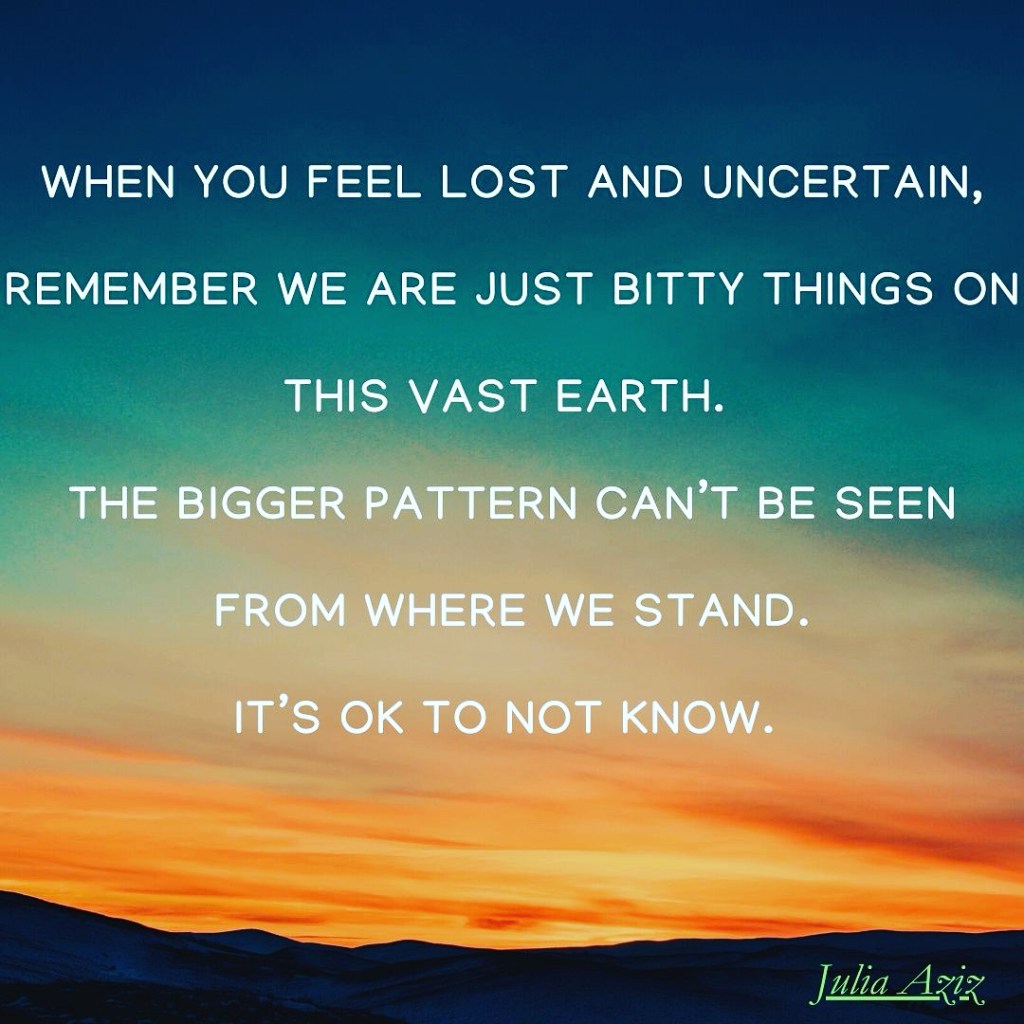
When you feel lost and uncertain, remember we are just bitty things on this vast earth. The bigger pattern can't be seen from where we stand. It's OK to not know.

On getting triggered: Anger, guilt, blame, and the feelings we don’t want to feel

I’m curious, who showed you how to feel and process anger in a healthy way?

(Just kidding, that’s not a fair question!)

Depending on our background, we may have learned to numb or suppress negative emotions, beat ourselves up, or lash out, but it’s pretty rare for an adult reading this today to have grown up in an environment that modeled well how to work with feelings like anger, guilt, shame, or fear. It’s something we as a species are still learning. We continue to trigger negative emotions in each other all the time though–that’s just being human and living in society with other humans. Part of growing into adulthood is learning how to respect what we feel while also respecting other people’s experience, and while that may sound extremely basic, it’s often extremely missing.

You may have heard the term “shadow work” before, and it may mean something different to you than it does to me. For simplicity’s sake, I’ll define it here as finding a way to work with the thoughts, feelings, and parts of ourselves we’d prefer to banish to the basement of our consciousness. Let’s say you read, hear, or see something that gets your ire up. You begin to look for fault, but rather than inwardly or outwardly blaming (or avoiding), you pause. You say to yourself, “Hey, let’s not focus on who’s wrong right now. I’m more curious about what’s happening inside you?” Maybe you notice a little voice that’s feeling scared or lost, along with some tension in the body. And you don’t try to do anything; you just be kind about it. You offer empathy and compassion to yourself the way you would if a dear friend was sharing something similar. Giving attention to thoughts, feelings, and sensations with care in the heart, you may find yourself breathing more deeply and noticing more nuance. Maybe there is something to say or do now or maybe not. At some point, you’ll know what the next step is for you.

This is just one of many different ways we can work with triggers. Shadow work helps us to be less controlled by our conditioning and inner demons, so we can return to our truest essence. The big triggers need big patience and support. And if we’re often holding space for other people’s triggered feelings, making room for our own is doubly important.

Anger is part of a guidance system–it points us toward boundaries that need setting and power that needs rebalancing. Once we’ve moved through its fire, we can use it as fuel for change. Rather than asking who is to blame or getting stuck ruminating over what other people are doing, we might look at questions such as: How can I accept my whole self, with all my feelings and history, and take courageous action from a place of centered clarity? What is my unique role here to play in the bigger context? As social beings, we have the power to regulate and disregulate each other. In tending to ourselves and showing up again to the complexities of living in society, we make a difference. 

The quieter voices in the room, just like the quieter voices in ourselves, have some important things to say. Listening and learning, we evolve together.

In the school of life with you, in gratitude for our connection,

Julia Aziz

Sign up for my mailing list to receive reflections like this in your inbox.

PS-If you need at-home support with the kind of shadow work we’re talking about, try the simple practice outlined in this little book. It’s an affordable, accessible resource for anyone feeling challenged by negative emotions and looking for a new way.

PPS-Here’s a song by the Middle East Peace Orchestra for more support to feel.

We each have our own role to play in the emergence of a new way. May those who are struggling for their lives, traumatized, and grieving be protected, supported, and loved. May the wisdom and power of our hearts prevail.

When you’re trying to let go

I’m happy to say I’ve been meeting new friends on my morning walks again. Just last month, I had encounters with a porcupine, owls, armadillos, hawks, foxes, a crested caracara, and coyote. I always try to play it cool, gently slowing down without making too big a deal of it, wanting to greet the animals in a natural way. As you might imagine, they don’t often hang out for more than a few moments, and I find myself feeling wistful each time they leave. Not knowing when or if we might meet again, I’m left with a fleeting joy, better nourished by the connection.

If you’ve been involved in spiritual, self-help, or personal growth circles, you’ve been hearing the phrase “let go” anywhere you look and listen. Lately, I’ve been curious about what I’m calling “letting leave,” a concept best taught by our wise companions and caregivers, the trees, in this new fall season. Letting leave is a less active, more receptive process than letting go, one that honors a timeline beyond human will. The leaves of a tree are not hustling and on the go; rather, when their time comes, they simply fall to the earth. A gust of wind or a big storm may also blow through and accelerate the process of leaving. Life is like this too, isn’t it? Smooth or sudden, ready or not, when change wants to happen, it will. 

In the healing arts, we often begin with what we want to let go of. What’s wrong, what’s the presenting concern, what are you struggling with? A problem focus is helpful in knowing what needs attention, but concentrating too much on the issue can sometimes hinder its release. As I see it, one of the key aspects to actually receiving help and letting support in is being able to let suffering leave. On the surface, we all want that. But when you’ve been struggling with something for a long time, be it physical, emotional, mental or spiritual, the question of “Who am I if I’m not a person with this pain?” feels almost incomprehensible. There’s no easy bypass here; instead, we might keep asking the question. At a deep level of consciousness, we “let leave” the attachment to knowing what we are or how change will occur.


The letting leave process doesn’t often happen in one fell swoop; everything has its season, and seasons come and go too. It can become a bit easier to trust the natural cycles when we notice the subtle shifts happening all the time. Have you ever found yourself telling a familiar painful story, and realized it’s not actually true or still happening in this moment? Healing may be the recurrent “in the now” experience of letting the resistance to what’s hard leave. It is also, as the Buddhists know well, the loosening of our clinging to what feels good. I watch those trees rooted down into the soil, and see how they allow more powerful forces to weather and therefore strengthen them. We have this capacity too, when we are grounded and willing to hold lightly what we think we have to do.

The invitation I’m hearing this fall is to soften and find courage in letting what needs to go leave when it’s ready, whether that’s old patterns, beliefs, or something more tangible. There will be grief, and sudden loss especially will need plenty of time and love to integrate. In holding sacred the leaving times, may we also find deep appreciation for all that is here with us now.

Until next time, thank you for reading,

Julia Aziz

Click here to receive musings in your inbox every now and then

I was able to catch a photo of this cutie pie, thought you might appreciate 🙂

When you need a real refresh to keep going

The summer intensity has been calling me back toward waterfalls again. This year, I’ve been playing with shifting my listening from one spot to the next, noticing how water bouncing off small rocks makes a tinkling sound under the noisy rush from heights above. The cascade’s separate sprays are like a crowd of different voices all talking at once, reminding me of the input overload so many of us feel these days. I try to hear one stream or another until I give up, listen to the whole chorus of voices together, and let it become one current, one being, one song. 

Sounds lovely, right, but how on earth do we let the current of our modern times sing us a song rather than slip us off the edge and take us down with it? “Go with the flow” won’t cut it. If we go with the flow of the collective, we are going down a dark vortex of strife and fear. So let’s pause for a moment from the many streams of deep grief, trauma, injustice, and tyranny and see if we can shift how we’re listening.

One of the aspects of waterfalls that strikes me this year is that the water only makes sound because of the rock. The flow is not separate from the hard places. I, like many, would usually prefer things progress forward in a direct line. But that’s not the way water, or life, moves. It curves over, under, and around the hard places, finding any way it can to keep flowing. We, too, must make contact with the rocky edges in ourselves and meander the curves to follow the course. The music is in keeping on.

I recently visited the waterfall I fell down a few years ago, and it, like many things, has changed. Time and weather has rearranged it. I’m a bit rearranged too, and maybe so are you. The way I see it, my Number One Job right now is to release negative thoughts and emotional tension as frequently as possible, so the waters don’t get muddied and stagnant, stuck in a puddle of doom. Letting go makes way for the flow to continue, showing the next right move at the next right time. We may want to get ahead of ourselves and hurry a plan, but like the water, the nature of life here on earth is that we move through what’s current before knowing what’s next

Releasing and renewing sounds easier than it is to remember and do. But I believe in you because if you can take a moment out of your busy day to read this, it means you can take a moment to refresh your mind, body, and precious heart too. If that sounds improbable or impossible, it’s time for more support. Support from people, the water, the birds, the ground, the breath, the body–much is available when we ask and open to it.

May the chorus of the world sound to you like perennial permission to pause and re-source yourself, so you can get back up stronger again and again and again.

With kindness,
Julia Aziz

*Sign up for my newsletter to receive these occasional reflections in your inbox, plus hear about upcoming offerings.

When all your “stuff” is up and you need to keep going anyway

Feel like you’re being tested? Maybe you’re backtracking in something you thought you had healed or grown from. Or perhaps you’re moving forward, but trudging through deep mud to get there. When all your “stuff” is up, and you have responsibilities you can’t just drop, well… first thing I want to say is you’re in good company. Sometimes those in helping or leadership roles feel a pressure to have it together super consistently, in pretty much all areas of life. Let’s throw that trash into the recycling bin and start with the premise that:

It’s OK to be in the middle of a process and not at the end of it.

Last fall, my daughter and I stumbled into a huge gathering of turkey vultures, but one of those birds was not like the others. A ranger later told us it was called the crested caracara, otherwise known as the Mexican eagle. This fascinating winged one looks like a hawk, flies like an eagle, and acts and eats much like a vulture. This kind of versatility is certainly called for these days.

From the Hawk

It’s good to keep a keen eye on one’s prey, focusing only on the priority of this particular moment. Tuning in acutely to what is needed here and now brings the relief of one-pointed attention. Over time, it also becomes the perseverance we need in action.

From the Eagle

Sometimes soaring above it all provides a better view. A little mental distance brings much needed perspective. We are just bitty things on this vast earth after all. The bigger pattern can’t be seen from our little corners of it. Also, let’s be real about our world context here. Is it not hubris to think we should be able to surf every rushing wave while watching others be pulled under the current? Like Krishnamurti said, “it is no measure of health to be well adjusted to a profoundly sick society.” 

Now wait, hold up! Isn’t it paradoxical, saying we need to keep a wide view and also a narrow one? Yes. I can’t think of a better time to embrace complexity, adapting as we go.

And from the Vulture

It’s important to digest the losses we’ve incurred, and find some kind of nourishment in doing so together. These losses continue to accumulate relentlessly, yet the soul food of grief is assimilated slowly, piece by piece, moment by moment. With our wingmates nearer, we may find more resources in sharing. 

I learned that the crested caracara, though a falcon, often walks on the ground and even collects material to build a nest. Bringing this all down to earth, it’s easy to spout wise words, not as easy to live them on a daily basis. This is especially true if you’re used to being the one supporting others, not needing support yourself. Yet all beings have something to offer, and all have blindspots and vulnerabilities too. If you’re faltering, please tell the truth to yourself about this, ask out loud for help, and be willing to receive it. Support may or may not come from the sources you expect it from, but a nest can be made from all sorts of material that shows up. May we make good use of what we find and create safe spaces to care for all the young, dear parts of ourselves that still need some holding. 

With love and respect for the unique creature you are,

Julia Aziz

*Sign up for my newsletter if you’d like to receive these reflections directly and also hear about upcoming offerings.

**Crested caracara image by Denis Doukhan at Pixabay

On burnout, waiting, and wonder

You might find this strange and a little gross, but the other day I spent some time watching a beetle roll a little balll of dung across the road. I became fascinated by his perseverance and how he naturally made use of what for most living beings on earth is just poop. I don’t know much about dung beetles, but it strikes me on a metaphoric level how we need this kind of resourcefulness in our current world. What creativity could transform what we must leave behind into something sustainable and life-giving?

The most common refrain I’m hearing from folks these days is â€śI just wish I knew when this pandemic would end.” There is a lot of sadness with this question, as no one can offer anything but predictions or false promises. Maybe there is a higher authority on the subject though. Nature tells us:

Everything changes.
Change happens on its own time.

Many humans in the modern western world use plans for comfort. We want to know what to expect, and we like to have something to look forward to. In some ways, we’ve forgotten how to wonder, how to give our full attention to the lived experience of now. Perhaps there is some connection here to the dung the beetle was pushing across the road. I wonder, what ways of thinking make us feel worse, and how can we digest and eliminate them for the higher good?

I also spent time last week watching some turkey vultures. I’ve never understood why these majestic birds are so underappreciated and almost feared. It’s captivating, the way they circle the skies above, feeding on what has completed its life cycle here. These birds live because other creatures die. In this, they embody rebirth. The vultures teach us that a new cycle begins out of the one that came before. Everything is made use of here, in this place we live. 

When we let go of the individual pursuit of happiness as such a supreme cultural value, perhaps compassion can be reborn. When the experts can’t give us good answers, maybe we’ll witness a rebirth in honoring curiosity and intuition. As I see it, we don’t need more gurus, we need more empathic, creative people who trust themselves and each other. I’m not trying to draw a silver lining around a very dark cloud. The weariness and the grief are real and everywhere. Still, I believe in us. I believe in our resilience and in our ability to make changes for the better. 

A friend who is more like a sister to me lives in the redwoods in California, and the fires this summer came within a quarter mile of her house. She told me after the weeks of smoke, flames, and devastation, the birds were the first animals to return to the forest. The birds, of course, were the ones who could most gracefully leave and most easily return. Their protection lies not in being the strongest fighters, but in being the lightest on their feet. Who is to say what’s most needed right now in our own personal and collective struggles. All I know is there are some great teachers living amongst us who have been there all along. We may have to open the door and look outside to find them.

May you feel the support of the ground, the possibility of the sky, and the beauty of your own true nature,

Julia

PS– If you’re a helper or healer longing to feel yourself again, consider joining us in the Release & Empower online program for regular mental, emotional, and physical release. It’s self-care accountability and spiritual renewal in good company. As of the time of this writing, I also have two openings for individual holistic psychotherapy. And all are welcome to check out this new home practice support book: When You’re Having A Hard Time: The Little Book That Listens. 

PPS– Sending some extra love to all those who are grieving the loss of a loved one this year. Big big hugs to you.